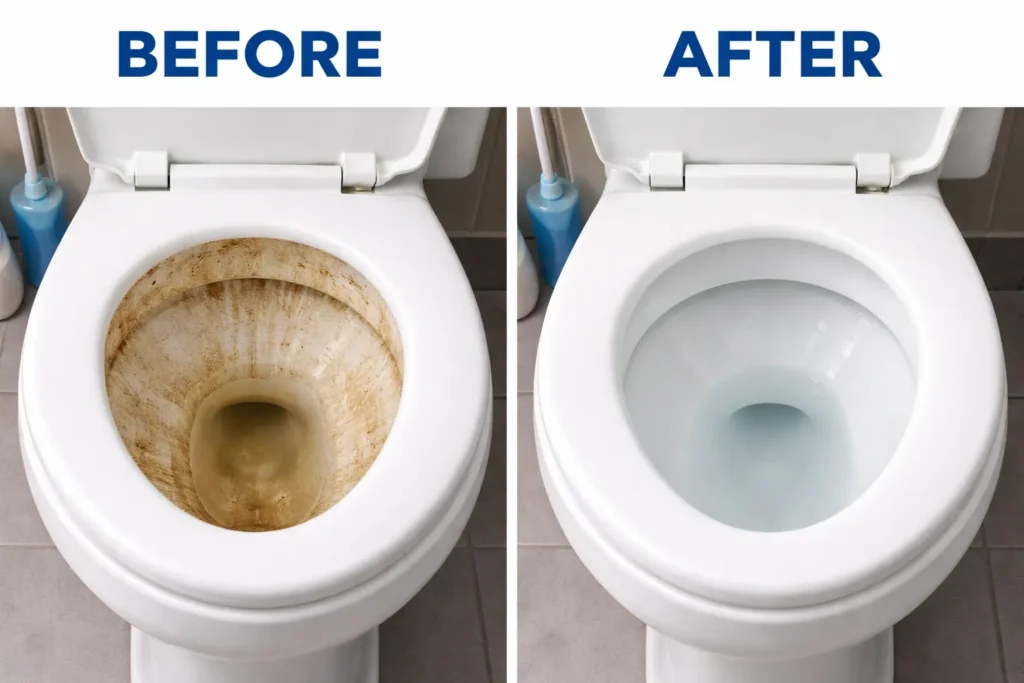
If you’re looking to clean toilet bowl stains effectively, start with these five expert methods: vinegar and baking soda treatments, pumice stone scrubbing, borax soaking, citric acid solutions, and professional-grade toilet bowl cleaners. Hard water and mineral buildup can be stubborn, but as experts in professional house cleaning, we know these hacks actually work. That’s why we created this guide to share expert-backed solutions you can rely on, not hit-and-trial methods.
In this guide, we break down each hack, explaining why it works, when to use it, and how to avoid damaging your toilet. Whether you’re dealing with light mineral buildup or stubborn stains, deep dive into the expert techniques we use in our deep cleaning sessions.
What Causes Hard Water Stains in Toilets?
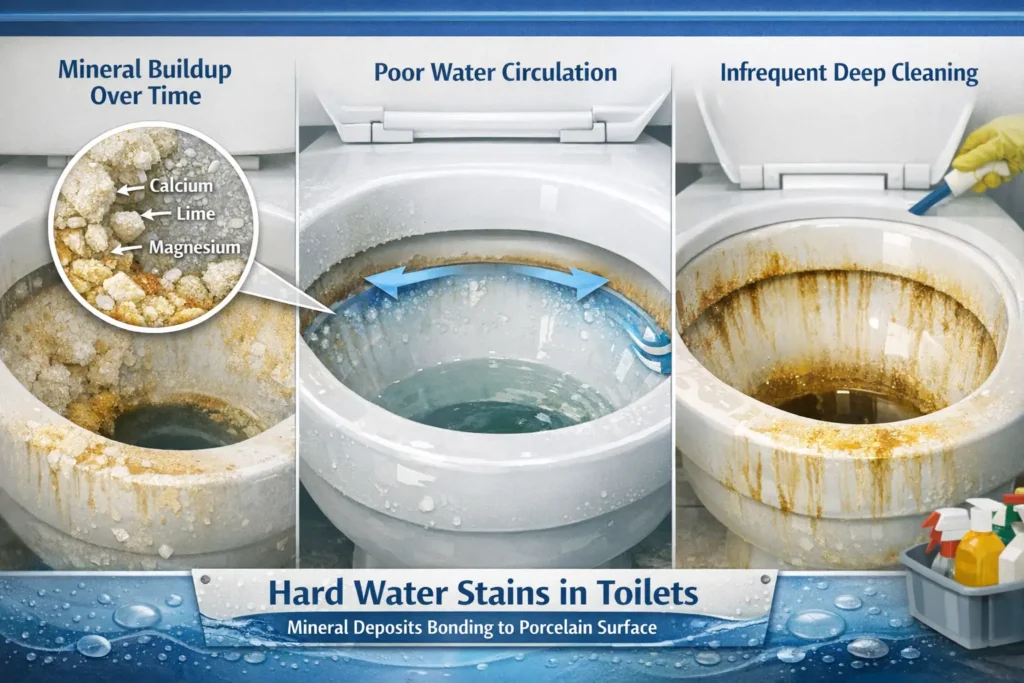
If stains keep returning despite regular cleaning, it’s usually because hard water minerals slowly bond with the porcelain surface. As cleaning industry experts, we see this problem in homes every day, and we understand how frustrating it can be when standard cleaning products don’t deliver results and make your bathroom look dull.
Mineral Buildup Over Time
Hard water stains develop when mineral-rich water repeatedly evaporates and leaves behind deposits of calcium, lime, and magnesium. Over time, these minerals harden and bond to the porcelain surface, creating the stubborn white, yellow, or brown marks you see inside the toilet bowl. From our professional cleaning experience, we know that once this buildup sets in, basic cleaners and quick scrubbing are rarely enough to remove it completely. You need the right approach to break down the minerals before they become permanent-looking stains.
Poor Water Circulation
Hard water stains commonly form just below the waterline or underneath the toilet rim, where water circulation is limited. These low-movement areas allow minerals to settle and cling to the surface instead of being flushed away. Based on our hands-on expertise, we often see stains concentrated in these spots because they’re easy to overlook during routine cleaning. If you’re only cleaning visible areas, mineral deposits can quietly build up where you don’t normally look.
Even if you clean your bathroom regularly, skipping occasional deep cleaning can lead to long-term staining. Light weekly cleaning removes surface dirt, but it doesn’t fully eliminate mineral residue. Over time, these deposits harden and become much harder to remove. We’ve found that when deep cleaning is delayed, you end up spending more time and effort later.
By understanding the real causes behind hard water stains, you can tackle the problem more effectively. With our cleaning expertise, we focus on preventing mineral buildup so toilets stay cleaner for longer with less effort.
Important Tips to Remember Before Cleaning the Toilet Bowl
Before trying any method to remove hard water stains, it’s important to prepare the right way. From our hands-on cleaning expertise, we know that a few simple precautions can make the process safer, more effective, and less time-consuming for you.
We always recommend starting by ensuring proper ventilation in the bathroom. Turn off the exhaust fan and allow fresh air to circulate naturally, especially when using cleaning products, so fumes don’t build up in a confined space.
One of the most important rules we follow in professional cleaning is never mixing vinegar, bleach, or chemical-based cleaners. Combining these products can create harmful reactions and pose serious health risks. If you’re trying a new cleaning method, test it on a small, hidden area of the toilet bowl first. This helps you confirm that the surface reacts well and prevents accidental damage to the porcelain.
With these safety tips in mind, you’re ready to clean. Now, let us explore the five cleaning hacks that actually work.
Hack #1: White Vinegar and Baking Soda
Best for Mild to Moderate Hard Water Stains
Why This Works
As expert cleaners, we rely on white vinegar because its natural acidity breaks down calcium and lime deposits left behind by hard water. Baking soda complements this by adding gentle abrasion, helping lift stains from the porcelain surface without scratching or dulling the finish. Together, they create an effective yet safe solution that works well for regular toilet maintenance.
What You Need
To use white vinegar and baking soda method, you’ll need a few simple household items:
White vinegar
Baking soda
A toilet brush or a non-abrasive, pumice-free scrub brush
Step-by-Step Instructions to Clean with White Vinegar and Baking Soda Method
We recommend starting with a dry bowl for best results.
Pour approximately two cups of white vinegar into the toilet bowl, making sure it reaches the stained areas.
Allow the vinegar to sit for at least 30 minutes so it can loosen mineral buildup. For more noticeable stains, letting it sit overnight works even better.
Sprinkle baking soda directly over the stained areas. You’ll notice fizzing, which signals that the cleaning action has started.
Gently scrub the bowl using a toilet brush, focusing on the waterline and any visible residue.
Flush the toilet to rinse away loosened minerals and residue.
Best For
We recommend cleaning with white vinegar and baking soda hack, if you’re dealing with:
Light to moderate hard water stains
Ongoing toilet upkeep and preventive maintenance
This method is ideal when you want a safe, effective solution that keeps stains from becoming more stubborn over time.
Hack #2: Pumice Stone Scrubbing
Best for Heavy, Set-In Hard Water Stains
Why This Works
As industry experts in professional cleaning, we turn to pumice stone scrubbing when mineral buildup has hardened and chemical cleaners alone aren’t enough. A toilet-safe pumice stone works by physically breaking down and lifting mineral deposits from the porcelain surface. When used correctly and with plenty of water, it removes even thick stains without scratching or damaging the toilet bowl.
What You Need
To carry out this method safely and effectively, you’ll need:
A toilet-safe pumice stone
Clean water to keep both the surface and the stone fully wet
Step-by-Step Instructions
We recommend taking your time with this method to avoid unnecessary pressure.
Start by thoroughly wetting both the pumice stone and the toilet bowl. This step is essential for protecting the porcelain.
Using light pressure, gently rub the pumice stone over the stained areas, focusing on mineral rings and buildup along the waterline.
Continue scrubbing slowly until you see the stains lifting from the surface.
Flush the toilet and rinse the bowl completely to remove loosened residue.
Important Notes
From our professional experience, proper technique matters:
Never use a pumice stone on dry porcelain, as this can cause scratches.
Avoid aggressive or fast scrubbing—let the stone do the work.
Best For
We recommend this hack if you’re dealing with:
Thick mineral rings around the waterline
Long-standing hard water stains that haven’t responded to milder cleaning methods
This approach is ideal when stains are deeply set and require a more hands-on, professional-level solution.
Hack #3: Vinegar and Borax Paste
Best for Stubborn Mineral Deposits
Why This Works
As an expert cleaning company, we rely on borax when standard cleaning solutions fail. Borax is a naturally occurring mineral cleaner that strengthens vinegar’s acidic power, allowing it to break down tough calcium and iron deposits more effectively. When combined, these two ingredients create a paste that clings to stained areas, giving you deeper, longer-lasting stain removal.
What You Need
To use this method safely and effectively, gather the following:
White vinegar
Borax powder
A toilet brush for controlled, even scrubbing
Step-by-Step Instructions to clean with Vinegar and Borax Paste
We recommend preparing the bowl properly so the solution can work at full strength.
Turn off the toilet’s water supply and flush to lower the water level in the bowl. This exposes the stained areas and prevents dilution.
Sprinkle borax generously over the hard water stains, focusing on heavy buildup along the waterline.
Slowly add white vinegar to the borax until a thick, paste-like reaction forms.
Allow the mixture to sit undisturbed for 1 to 2 hours, giving it time to loosen stubborn mineral deposits.
Scrub the area thoroughly with a toilet brush, then flush to rinse away residue.
Best For
We recommend this hack if you’re facing:
Hard water stains that don’t respond to basic or quick-clean methods
Homes with very hard water where mineral buildup occurs frequently
This approach is ideal when you need a stronger, professional-level solution without relying on harsh chemical cleaners.
Hack #4: Citric Acid Solution
A Natural and Powerful Option
Why This Works
As cleaning professionals, we often recommend citric acid for homeowners who want an effective yet environmentally friendly way to remove hard water stains. Citric acid is highly efficient at breaking down mineral scale, including calcium and lime, which makes it a common ingredient in eco-conscious cleaning solutions. It works deep into the buildup while being gentler on porcelain than many harsh chemical cleaners.
What You Need
To prepare this solution, you’ll need:
Citric acid powder
Warm water
A spray bottle or bowl for easy application
Step-by-Step Instructions to clean with Citric Acidic Solution
We suggest mixing the solution carefully to ensure even coverage.
Combine two tablespoons of citric acid powder with warm water, stirring until fully dissolved.
Apply the solution directly to the stained areas of the toilet bowl using a spray bottle or by pouring it in with a bowl.
Allow the mixture to sit for 30 to 60 minutes so it can penetrate and loosen mineral deposits.
Gently scrub the area with a toilet brush, then flush to rinse away residue and reveal a cleaner surface.
Best For
We recommend this method if you’re looking for:
A natural solution suited for eco-conscious households
An effective approach for moderate to heavy hard water stains
This hack is ideal when you want strong cleaning power without compromising on environmental responsibility or surface safety.
Hack #5: Commercial Descaling Cleaners
When DIY Methods Are Not Enough
Why This Works
After cleaning homes for years, we know there are situations where natural or DIY solutions simply can’t break through heavy mineral buildup. Professional descaling cleaners are specifically formulated to dissolve calcium, lime, and iron deposits quickly and efficiently. These products work at a deeper level, making them a reliable option when stains are extremely stubborn or time is limited.
What You Need
To use this method safely and effectively, prepare the following:
A toilet descaling cleaner designed for calcium and lime removal
A toilet brush for controlled scrubbing
Protective gloves to safeguard your hands
Step-by-Step Instructions to Clean a Toilet Seat with Commercial Descale Cleaners
We always recommend following product instructions closely for the best results.
Apply the descaling cleaner directly to the stained areas, as directed on the product label.
Allow the cleaner to sit for the recommended dwell time so it can break down hardened mineral deposits.
Lightly scrub the surface with a toilet brush, focusing on problem areas.
Flush thoroughly to rinse away residue and reveal a visibly cleaner bowl.
Best For
We suggest this option if you’re dealing with:
Extremely stubborn hard water stains that haven’t responded to DIY methods
Situations where you want fast, noticeable results with minimal effort
This approach is ideal when you need a professional-strength solution to restore your toilet’s appearance quickly and effectively.
Pro-Tip: You can also use Coke or Pepsi to clean your toilet bowl. These sodas contain mild acids (like phosphoric acid) that help break down stubborn stains, mineral deposits, and rust buildup. Simply pour a can into the bowl, let it sit for an hour or more, then scrub with a toilet brush and flush for a sparkling clean finish.
What Not to Do When Cleaning Hard Water Stains
When it comes to removing hard water stains, knowing what not to do is just as important as using the right cleaning methods. As skilled professionals, we’ve seen how small mistakes can lead to damaged porcelain and stains that become even harder to remove over time. Avoid these common mistakes –
Do not mix bleach and vinegar – We never combine these products because they can create harmful fumes and pose serious health risks. If you use one cleaner, always rinse thoroughly before switching to another.
Do not use metal scrubbers or abrasive tools – While they may seem effective, metal scrubbers can scratch porcelain. From our experience as skilled professionals, these scratches make it easier for minerals to settle and worsen staining over time.
Do not ignore stains for long periods – When hard water stains are left untreated, mineral deposits harden and become more difficult to remove. We’ve found that early action helps you clean more easily and prevents permanent damage.
Do not rely on improper cleaning methods – Using the wrong tools or techniques can damage the toilet surface and increase future staining. With the right approach, you can protect the porcelain and maintain long-term cleanliness.
How to Prevent Hard Water Stains on Your Toilet Seat in the Future
Preventing hard water stains is far easier than removing them once they’ve set in. From our professional cleaning experience, we’ve found that consistent care and a few smart habits can help you keep your toilet cleaner for longer and reduce the need for heavy scrubbing.
Clean at Least Once a Week
We recommend light cleaning at least once a week. Regular maintenance prevents minerals from settling and bonding to the porcelain surface. When you stay consistent, you stop stains before they have the chance to harden, making routine cleaning quicker and less demanding for you.
Use Vinegar Monthly
A monthly vinegar treatment is one of the simplest preventive steps we suggest. Allowing vinegar to sit in the toilet bowl for a short period helps dissolve early mineral buildup before it becomes visible staining. This small habit can save you significant time and effort over the long term.
Install a Water Softener
Reducing mineral content at the source is the most effective long-term solution. In homes with very hard water, we often recommend installing a water softener. By lowering calcium and magnesium levels, you minimize the root cause of staining throughout your bathroom—not just in the toilet.
Flush and Dry
After cleaning, we suggest occasionally brushing the bowl and flushing thoroughly to reduce lingering water residue. Less standing water means fewer minerals left behind to dry and form deposits. This simple step helps you maintain a cleaner finish between deep cleans.
By following these preventive measures, you can reduce recurring hard water stains and maintain a fresher, cleaner toilet with far less effort over time. This also helps in keeping your bathroom looking shiny and smelling fresh.
When to Consider Professional Cleaning Help
If hard water stains keep returning despite regular cleaning, the problem often goes beyond what you can see in the toilet bowl. From our experience, mineral buildup can collect in hidden areas such as toilet jets, pipes, and internal surfaces. When this happens, surface-level cleaning only offers temporary results.
This is where professional deep cleaning becomes a need of an hour. We use specialized tools, industry-grade descaling products, and proven techniques to remove deep-set mineral deposits safely and effectively. We focus not just on visible stains, but on the underlying buildup that causes them to return.
By choosing professional support, you save time, avoid damage to porcelain and plumbing, and restore your toilet to a truly clean, hygienic state. When DIY methods stop working, deep cleaning ensures long-term results you can actually rely on. Contact us to maintain hygiene and cleanliness in your bathroom.
Conclusion: A Clean Toilet Is Achievable with the Right Approach
Hard water stains may appear permanent, but they can be removed with the right method. Knowing how to remove hard water stains from your toilet helps you choose the most effective solution, whether that’s a vinegar soak, gentle scrubbing, or a descaling cleaner.
These five cleaning hacks that actually work are simple, affordable, and effective when used correctly. With regular maintenance and consistent care, you can prevent stains from returning and keep your toilet clean, hygienic, and stain-free year-round.
Even small changes make a difference. Start with one proven method today, and you’ll notice visible improvement after just one proper clean. And even after that, you’re not getting the results, don’t hesitate to book your deep cleaning services with Mesh Maids.