Introduction
Limescale buildup in an electric kettle is one of the most common kitchen issues our clients face. It makes water taste bad, slows down boiling time, and leaves the inside of your kettle looking chalky and dirty. If you’re trying to figure out how to remove limescale from your electric kettle in the easiest way, we’re here to give you the best solution which is to fill your kettle with equal parts white vinegar and water, boil the mixture, let it sit for 20–30 minutes, scrub the inside gently, pour it out, rinse thoroughly, and re-boil fresh water to clear any smell; or you can do the same using lemon juice, or dissolve a tablespoon of citric acid in hot water for a quick, strong clean; and for extra stubborn spots around the spout or base, you can wipe them with a baking soda paste before rinsing everything again.
This complete process is what we use to safely remove even the toughest mineral deposits without harming your appliance.
We’ve seen how frustrating limescale can be for you, especially when it keeps returning despite regular cleaning. The key is not just removing scale, but using the right method that actually breaks down hard water minerals instead of pushing them around. With simple household ingredients and the correct steps, you can restore your kettle’s performance, protect its heating element, and enjoy clearer, fresher hot water.
We understand that cleaning your electric kettle might not be part of your house cleaning routine. That’s why we bring in this guide for you. In this guide, we’ll take you through each descaling method in detail — from vinegar and lemon solutions to citric acid, baking soda, preventative maintenance, and signs your kettle needs professional attention. By the end, you’ll know exactly how to keep your electric kettle spotless with minimal effort and maximum results.
What Is Limescale and Why Does It Build Up in an Electric Kettle?
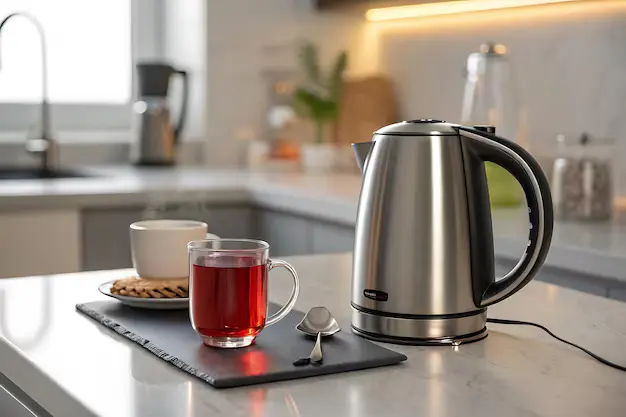
Limescale is a chalky white or off-white residue that forms when hard water evaporates and leaves behind mineral deposits — mainly calcium and magnesium. In kettles, this buildup collects quickly because water is constantly heated and cooled. You’ll usually notice limescale inside the kettle walls, on the heating element, around the spout, on the base plate, and even along the water-level indicators.
From our experience, limescale tends to build up faster if you live in a hard-water area, boil water several times a day, leave leftover water sitting in the kettle, or go long periods without descaling. These everyday habits cause minerals to settle, harden, and form that stubborn crust.
While limescale may seem harmless at first, it does more damage than you realize. It can slow down heating, affect the taste of your water, increase electricity usage, cause uneven heating, and even shorten the overall lifespan of your kettle. This is why we always remind our clients that regular descaling isn’t optional; it’s essential for keeping your appliance clean, efficient, and safe to use.
Why Use Natural Cleaners to Remove Limescale?
Before we walk you through each method, it’s important to understand why natural cleaners like vinegar, lemon, and baking soda work so well. These ingredients remove limescale quickly without damaging your kettle, and they’re safe enough for regular use.
1. Vinegar
White vinegar contains acetic acid, which breaks down tough mineral deposits with ease. It dissolves limescale naturally and safely, making it one of the most effective descales you can use at home.
2. Lemon
Lemon juice is another natural acid that tackles limescale while leaving a clean, fresh scent behind. Many of our clients prefer this method if they want a gentler smell compared to vinegar.
3. Baking Soda
Baking soda works as a mild abrasive and a powerful deodorizer. It helps lift stubborn spots, especially around the spout or heating plate, while neutralizing odors inside the kettle.
Together, these natural ingredients are safe, effective, affordable, and perfect for keeping your electric kettle clean without relying on harsh chemicals.
How Often Should You Remove Limescale?
From our point of view, cleaning consistently is the key. Here’s how often we recommend you remove limescale, depending on your situation:
- Every 4 weeks, if you live in a hard-water area
In homes with hard water, minerals build up much faster. Many of our clients in these regions see limescale forming even with a regular cleaning routine, so monthly descaling keeps the kettle in top condition. - Every 2–3 months if your water is soft
Soft water leaves fewer mineral deposits, but a thin layer of scale still forms over time, especially if you use your kettle daily. Descaling every few months is usually enough. - Immediately if you notice warning signs
If you see flakes, cloudy water, a chalky bottom, or white rings inside the kettle, we recommend descaling right away. These early signs show that buildup is happening faster than usual.
Regular descaling not only maintains cleanliness but also protects the heating element, speeds up boiling, and extends the overall lifespan of your kettle. We always emphasize this to our clients during home cleanings.
The Easiest and Most Effective Ways to Remove Limescale
Below are the most reliable and beginner-friendly methods we recommend to our clients when they want quick, safe, and effective limescale removal. Choose the method that feels most convenient for you — all of them work effectively based on our experience cleaning homes for years.
Method 1: Remove Limescale with Vinegar (The Most Popular Method)
Why This Works
White vinegar contains acetic acid, which breaks down mineral deposits quickly without damaging the inside of your kettle. It’s one of the strongest and safest natural descalers we trust.
What You’ll Need
- 1 cup white vinegar
- 1 cup water
- Soft cloth or sponge
Step-by-Step Instructions
Step 1: Make the Solution
Mix equal parts water and white vinegar directly inside your kettle. This ensures the acid reaches all areas of the buildup.
Step 2: Boil the Mixture
Turn on your kettle and let the solution boil. The heat helps loosen limescale instantly and makes the next steps easier.
Step 3: Let It Sit for 20–30 Minutes
Turn the kettle off and let the hot mixture sit. This soaking process allows the vinegar to break down hardened mineral deposits effectively.
Step 4: Scrub the Inside
Use a soft sponge or cloth to gently wipe away the loosened limescale. Avoid abrasive scrubbers — they can scratch the kettle’s interior.
Step 5: Rinse Thoroughly
Rinse 2–3 times with clean water to remove any leftover vinegar smell or taste.
Step 6: Boil Water Once More
Boil a full kettle of fresh water and discard it. This final step ensures your kettle is completely clean, odor-free, and ready to use.
Your kettle will now look shiny, fresh, and completely free of limescale.
Method 2: Remove Limescale Using Lemon (Fresh & Natural)
Why Use This Method?
Lemon works very similarly to vinegar, but with a fresher scent that many of our clients prefer. It removes limescale effectively while leaving your kettle smelling bright and clean.
What You’ll Need
- 1–2 fresh lemons
- Water
- Soft sponge
Step-by-Step Instructions
Step 1: Squeeze Lemon Juice
Cut your lemons in half and squeeze the juice directly into your kettle. You can also drop in the squeezed halves for extra cleaning power.
Step 2: Add Water
Fill the kettle halfway with clean water. This helps dilute the lemon juice and ensures it covers all the areas affected by limescale.
Step 3: Boil the Mixture
Turn on your kettle and let the lemon-water blend come to a full boil. The heat activates the natural acids and loosens stubborn mineral deposits.
Step 4: Let It Sit
Turn off the kettle and let the hot mixture sit for about 30 minutes. This soaking time breaks down tough limescale without needing harsh scrubbing.
Step 5: Scrub + Rinse
Use a soft sponge to gently wipe the inside of the kettle, then rinse thoroughly with fresh water.
Avoid abrasive materials to prevent scratching.
This natural method leaves your kettle clean, refreshed, and smelling wonderfully citrusy — something many of our clients love after a deep cleaning.
Method 3: Remove Limescale with Baking Soda (For Stubborn Spots)
What You’ll Need
- 1 tablespoon baking soda
- Water
Step-by-Step Instructions
Step 1: Add Baking Soda
Add 1 tablespoon of baking soda directly into your kettle. This gentle abrasive helps lift stubborn mineral patches that don’t loosen easily.
Step 2: Fill with Water
Fill the kettle halfway with clean water. This creates a mild cleaning solution that spreads evenly across the interior.
Step 3: Boil It
Turn on your kettle and let the baking-soda mixture come to a boil. This bubbling action helps break down leftover limescale and neutralizes odors at the same time.
Step 4: Rinse Well
Pour out the mixture and rinse the kettle several times with fresh water to remove any baking soda residue.
This method works beautifully for lightweight buildup, refreshing your kettle, and eliminating any unpleasant smells — something we often recommend for clients who want a quick, gentle clean between deeper descaling sessions.
Method 4: Vinegar + Baking Soda (For Heavy Limescale)
If your kettle has thick, stubborn limescale that regular cleaning can’t handle, this powerful vinegar-and-baking-soda combination works wonders. The natural fizzing reaction helps break down hardened deposits quickly — a method we often recommend to clients dealing with long-term buildup.
What You’ll Need
- ½ cup vinegar
- 1 cup water
- 1 tablespoon baking soda
Step-by-Step Instructions
Step 1: Add Vinegar and Water
Pour ½ cup of vinegar and 1 cup of water into your kettle. This creates the base solution for dissolving tough mineral layers.
Step 2: Add Baking Soda Slowly
Carefully add 1 tablespoon of baking soda. It will fizz immediately, so add it slowly to prevent overflow.
This fizzy reaction helps break apart thick limescale stuck to the walls and heating plate.
Step 3: Let It Fizz and Sit
Allow the mixture to sit for about 10 minutes. This gives the solution time to loosen heavy buildup.
Step 4: Boil the Solution
Turn on your kettle and let the mixture boil. The heat intensifies the cleaning power and helps remove deep-set deposits.
Step 5: Let It Cool
Turn the kettle off and let the solution cool down before the next step.
Step 6: Scrub Gently and Rinse Thoroughly
Use a soft sponge to gently scrub away any leftover residue, then rinse the kettle several times with clean water.
Your kettle will look almost brand new after this treatment — bright, clean, and completely free of stubborn scale, just like the results we aim for when deep-cleaning kitchen appliances for our clients.
How to Clean the Exterior of an Electric Kettle
The inside of your kettle isn’t the only area that needs care — the exterior also collects fingerprints, stains, splashes, and grease over time. As cleaning experts and cleaning kitchen for years, we’ve noticed that a quick wipe-down keeps your kettle looking new and prevents long-term discoloration.
What You’ll Need
- A soft cloth
- Mild dish soap
- Water
- Baking soda (optional, for stubborn stains)
Steps to Clean the Exterior of an Electric Kettle
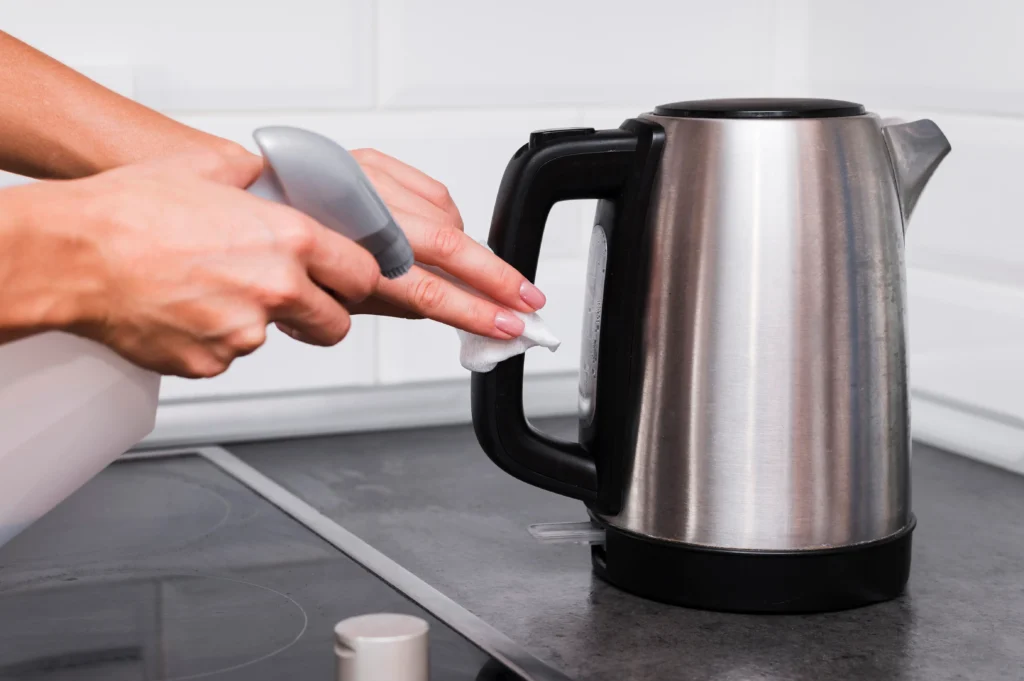
- Unplug the kettle completely.
Safety first. You should always make sure the appliance is disconnected before cleaning. - Dip a soft cloth in warm, soapy water.
Use mild dish soap to avoid leaving streaks or residue. - Wipe down the exterior gently.
Clean the body, handle, base, and lid area with light pressure. - For stains, use a baking-soda paste.
Mix baking soda with a few drops of water and apply it to stained spots. This gentle paste lifts marks without scratching the surface. - Wipe again with clean water.
This removes any soap or baking soda left behind. - Dry with a microfiber cloth.
This prevents water spots and leaves a streak-free finish.
Important Tip
Avoid abrasive scrubbers or steel wool — they can scratch stainless steel, plastic, chrome, or matte finishes. A soft cloth is always enough for regular upkeep.
How to Prevent Limescale Buildup in the Future
We always suggest to our clients and to everyone that a few simple habits can reduce limescale buildup and keep your electric kettle cleaner for longer. Here’s what we recommend to our clients:
- Empty After Every Use
Always pour out leftover water instead of letting it sit. Standing water encourages mineral deposits to settle and harden. - Use Filtered Water
If you live in a hard-water area, using filtered water can significantly slow down limescale formation by reducing mineral content. - Descale Every Month
A quick monthly clean prevents heavy buildup and keeps your kettle working efficiently. Regular descaling is easier than deep cleaning later. - Wipe After Each Use
After the kettle cools, wipe the inside and let it air dry. This helps prevent moisture, which contributes to mineral buildup. - Avoid boiling the Same Water
Each time you reboil the same water, minerals become more concentrated. We recommend to use fresh water whenever possible.
Small daily habits like these make a big difference and help extend the life of your kettle. This is what we always share with our clients during home cleanings.
Common Mistakes to Avoid While Cleaning Your Electric Kettle
Over the years, we’ve seen many kettles wear out faster simply because of a few avoidable cleaning mistakes. Here’s what we always remind our clients to watch out for:
Using Harsh Chemicals
Strong chemical cleaners can damage the inner coating of your kettle and may leave behind unsafe residues. Natural solutions like vinegar, lemon, or baking soda are always safer.
Scrubbing with Steel Wool
Steel wool or abrasive pads create tiny scratches inside the kettle. These scratches trap minerals and make limescale build up even faster.
Not Rinsing Properly
If you don’t rinse well after descaling, leftover vinegar or lemon can affect the taste and smell of your hot water. Always rinse 2–3 times for best results.
Ignoring Heavy Limescale
Leaving thick limescale untreated leads to slow heating, higher electricity usage, and even early breakdown of the kettle’s heating element.
By avoiding these mistakes, you help your kettle last longer, perform better, and stay cleaner with less effort — something we always emphasize during our kitchen deep cleans.
When Should You Consider Replacing Your Kettle?
Even with consistent descaling and the best cleaning habits, every electric kettle has a lifespan. Having worked in homes for years, we’ve seen kettles that simply reach a point where cleaning is no longer the solution. You should consider replacing your kettle if you notice:
- The heating element no longer works efficiently
If your water takes much longer to boil even after deep cleaning, the internal element may be failing. - Visible rust or corrosion
Rust is a sign of internal damage that you can’t fix with cleaning and can affect the safety of the water you drink. - Peeling or flaking inside the kettle
Any peeling coating means the interior surface is deteriorating, which makes the kettle unsafe to use. - A persistent burnt smell
A burnt or metallic smell, even after several rinses, is usually a sign of internal overheating or component damage. - Limescale returns unusually fast
When heavy scale forms again within days or weeks, the kettle may have micro-damage that traps minerals.
In all these situations, replacing your kettle is safer and more practical than repeatedly cleaning it.
Why Your Home Needs Professional Cleaning
As professional cleaners, we understand that a clean home is more than just a clean space for you — it’s a place where you relax, breathe easy, and feel comfortable every day. While regular chores help, some areas of the home need deeper attention that only trained professionals can provide. That’s where professional house cleaning services make all the difference.
With expert tools and safe products, cleaners take care of the tasks most homeowners don’t have time for, such as:
- Deep cleaning kitchens and bathrooms
- Removing stubborn grime, grease, and stains
- Vacuuming carpets and rugs
- Mopping and disinfecting floors
- Cleaning baseboards, window sills, and fixtures
This level of attention ensures your home looks spotless, smells fresh, and feels healthier. Need a spotless home? Contact us for professional house cleaning services.
Benefits of Professional Cleaning for Your Home
1. A Healthier Living Environment
Dust, allergens, and bacteria build up without us noticing. Professional cleaners use high-quality products and techniques to eliminate these, improving indoor air quality and reducing triggers for allergies.
2. Saves You Time and Energy
Life is busy — work, kids, routines, and responsibilities can leave little time for deep cleaning. Professional cleaners let you enjoy a clean home without sacrificing your time.
3. Better, Longer-Lasting Results
Experts know how to treat different surfaces, materials, and stains correctly. Their methods help protect furniture, flooring, and appliances so they last longer and stay looking new.
4. Reduced Stress
A clean home brings mental clarity. Walking into a fresh, organized space instantly reduces stress and boosts your mood.
5. Custom Cleaning Plans
We, at Mesh Maids, adjust to your lifestyle. Whether you need weekly maintenance, monthly deep cleaning, or occasional help before guests arrive, you can choose what works best.
Conclusion
Limescale buildup is a normal part of using an electric kettle, especially in hard-water areas. But the good news is that removing it is simple, fast, and requires only natural household ingredients. In this guide, you learned the easiest and most effective ways to remove limescale from an electric kettle, using vinegar, lemon, and baking soda. With these simple steps, your kettle will stay clean, efficient, and long-lasting.
By descaling your kettle regularly, you ensure better heating performance, longer appliance life, and clean, great-tasting water every day. Follow this guide to keep your kettle fresh and limescale-free — the easy way.
Book professional cleaning services with Mesh Maids today.