Introduction
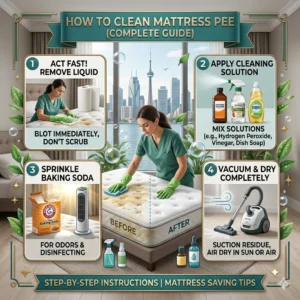
If you’re wondering how to clean mattress pee, the most effective method is to act quickly by blotting the area with paper towels, applying a solution of white vinegar and water to neutralize odor, sprinkling baking soda to absorb moisture, and allowing it to dry completely before vacuuming. This process helps you in removing stains, eliminating smells, and preventing bacteria buildup without damaging your mattress.
Whether it’s from a kid, a pet, or an accidental spill, the key lies in using the correct cleaning techniques and acting at the right time. Different mattress materials may require slight variations, but the core process remains the same.
At Mesh Maids, we have handled countless deep cleaning situations across Canada, and mattress stain removal is one of the most common challenges we solve. We understand that lingering odors and stains are frustrating, which is why we focus on proven, practical methods that actually work during house cleaning. In this complete guide, we’ll walk you through step-by-step instructions, expert tips, and preventive measures so you can confidently clean your mattress and keep it fresh for the long term.
Why It’s Important to Clean Mattress Pee Immediately
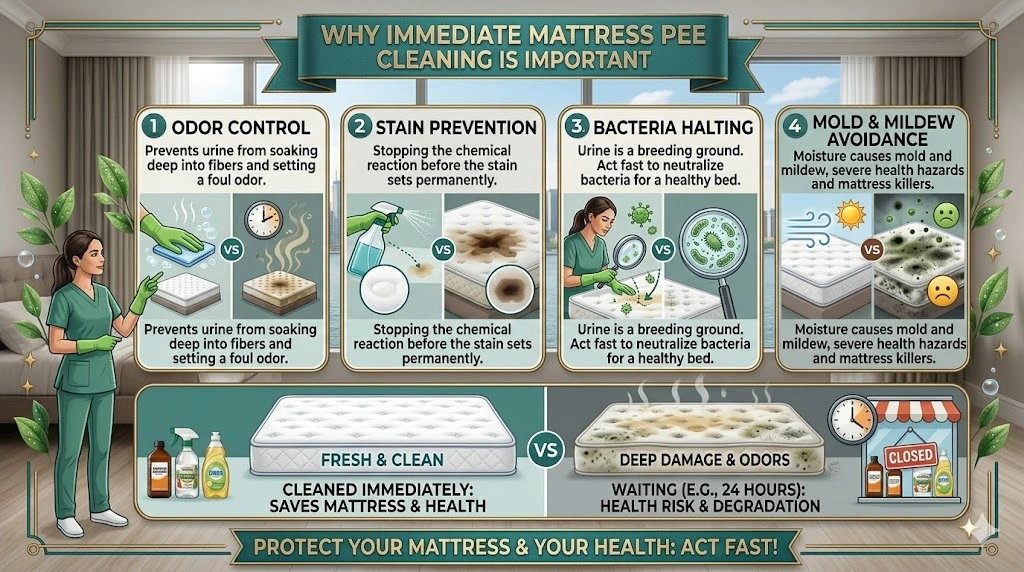
Cleaning urine from your mattress right away is essential for several reasons. First, it prevents odor buildup, as urine contains ammonia that can intensify over time and leave a persistent smell in your bedroom. Acting early and quickly also avoids permanent stains, since the longer urine sits, the deeper it goes the mattress fibers, making it much harder to remove.
Timely cleaning also maintains hygiene, protecting you and your family from bacteria, allergens, and potential mold growth. Ignoring spills can create a breeding ground for germs that affect your health. Additionally, prompt care protects your mattress lifespan, as untreated stains can seep into internal layers and weaken the structure over time.
For instance, we once assisted a family whose pet had an accident on a memory foam mattress. They initially thought it was a minor spill, but within a few hours, the urine had soaked in, causing both a noticeable odor and a stubborn stain. We addressed it right away with the right cleaning techniques and eliminated the smell, restoring the mattress to its original freshness.
This saves time, preserves the mattress, and maintains a cleaner, healthier sleep environment for everyone in the home.
How to Clean Mattress Pee: Step-by-Step Instructions
Cleaning mattress pee effectively requires the right tools, supplies, and methodical steps. After handling many mattress accidents, this approach has proven to be one of the safest and most effective ways to clean and protect your mattress.
Tools and Supplies You’ll Need
- Paper towels or clean absorbent cloths
- Spray bottle
- White vinegar
- Baking soda
- Mild liquid detergent (optional)
- Hydrogen peroxide (for stubborn stains)
- Vacuum cleaner with upholstery attachment
- Gloves (optional, for hygiene)
Step-by-Step Cleaning Process to Clean Mattress Pee
Step 1: Blot the Area Immediately
If the accident is fresh, start by blotting the urine with paper towels or a clean cloth. Press gently to absorb as much liquid as possible—avoid rubbing, as this can push the urine deeper into the mattress fibers.
Step 2: Apply a Vinegar Solution
Mix equal parts of white vinegar and water in a spray bottle. Lightly spray the affected area to neutralize odor and prevent bacterial growth. Let it sit for 5–10 minutes.
Step 3: Blot Again
After letting the solution sit, blot the area again with clean towels to remove excess moisture. The goal is to lift out as much liquid as possible before it soaks deeper.
Step 4: Sprinkle Baking Soda
Generously cover the damp area with baking soda. Baking soda absorbs remaining moisture and helps eliminate odors. For better results, you can add a few drops of essential oil if you like a fresh scent.
Step 5: Optional Deep Cleaning for Stubborn Stains
For tough stains, mix a small amount of hydrogen peroxide with a few drops of mild detergent. Lightly apply to the stain, let it sit for 5–10 minutes, and then blot it with a clean cloth. Always test on a small hidden area first to ensure it doesn’t affect the mattress color.
Step 6: Let the Mattress Dry Completely
Allow the mattress to air dry fully. You can speed up drying by placing it near a fan, opening windows, or using a hairdryer on a cool setting. Avoid sleeping on the mattress until it is completely dry to prevent odor or bacterial growth.
Step 7: Vacuum the Residue
Once dry, vacuum the baking soda residue thoroughly using a vacuum cleaner with an upholstery attachment. This final step lifts the mattress fibers and removes any remaining particles, leaving your mattress clean, fresh, and ready to use.
Pro Tip: Even after a professional clean, it’s smart to use a waterproof mattress protector to prevent future accidents and reduce cleaning frequency.
By following these steps, you can tackle any mattress pee accident efficiently.
How to Remove Dried Urine Stains from a Mattress
Dried urine stains on a mattress require a slightly stronger approach than fresh spills. Over the years, we’ve learned that tackling stains carefully and thoroughly can bring your mattress back to a cleaner, fresher condition without harming the fabric.
Step 1: Rehydrate the Stain
Start by lightly spraying the dried stain with water or a vinegar solution. This helps loosen the dried urine, making it easier to clean. Be careful not to soak the mattress; just dampen it enough to reactivate the stain.
Step 2: Use a Mild Detergent
Mix a small amount of mild liquid detergent with water. Using a clean cloth, gently dab the stained area with the solution. Avoid scrubbing, as this can push the stain deeper into the mattress fibers. From our work with clients, this step is often the most effective at breaking down old stains.
Step 3: Repeat the Baking Soda Process
After treating the stain with detergent, sprinkle a generous layer of baking soda over the area. Let it sit overnight to absorb moisture and neutralize odors. The next day, vacuum the residue thoroughly to lift the mattress fibers and remove any leftover particles.
From our experience, you may need to repeat this process for very old or stubborn stains from any type of mattress. With consistent care and the right techniques, even the most challenging mattress accidents are manageable, giving you a clean, hygienic sleeping surface.
For example, a family in Vancouver reached out to us about an old urine stain on a memory foam mattress. Using a careful cleaning process with detergent and baking soda, we successfully removed both the stain and odor, leaving the mattress fresh and usable again.
If you’re based in Vancouver or surrounding areas, explore our house cleaning cost in Vancouver guide to see average pricing, deep cleaning rates, and what impacts the cost of professional cleaning services.
How to Remove Urine Smell from Mattress Permanently (Genius Hacks)
Even after cleaning, urine odors can linger in your mattress, making your bedroom uncomfortable. From our experience, combining a few smart techniques can help you permanently eliminate smells and restore freshness.
1. Use Baking Soda + Airflow
Sprinkle a generous layer of baking soda over the affected area. Baking soda absorbs remaining moisture and neutralizes odor. Let it sit for several hours—or even overnight—for maximum effect. At the same time, keep windows open or use a fan to improve ventilation, helping the mattress dry completely and preventing bacteria growth. This simple step often works wonders for lingering smells.
2. Use Enzyme Cleaners (Advanced Option)
For particularly stubborn odors, especially from pets, we recommend using enzyme-based cleaners. Enzymes break down urine proteins completely, eliminating the source of the smell rather than just masking it. We’ve seen how effective this method is when clients struggled with repeated accidents—after enzyme treatment, even old odors disappear entirely.
3. Sunlight Exposure
If possible, place your mattress in direct sunlight. Natural UV rays help kill bacteria and further reduce odor. Even a few hours of sun exposure can make a noticeable difference in freshness, especially when combined with the baking soda and enzyme methods.
Using these steps together ensures your mattress stays odor-free and hygienic long-term, saving you from repeated cleaning headaches.
Cleaning Mattress Pee from Kids vs Pets
Not all mattress accidents are the same, and knowing the difference between kids’ urine and pet urine helps you choose the right cleaning method.
Kids Urine
Kids’ accidents are usually less concentrated and therefore easier to clean. For most situations, the basic cleaning steps—blotting, vinegar solution, baking soda, and proper drying—are enough to remove both stains and odors. From our experience, acting quickly with kids’ spills often prevents lingering smells and keeps the mattress fresh with minimal effort.
Pet Urine
Pet urine, on the other hand, is stronger in odor due to higher ammonia content. It can soak deeper into the mattress and cause persistent smells if not treated correctly. We recommend using enzyme-based cleaners, which break down the proteins in pet urine and eliminate the source of the odor entirely. Proper ventilation, baking soda, and sunlight exposure combined with enzyme treatment usually deliver the best results.
By understanding the differences, you can tackle each type of accident effectively and maintain a clean, hygienic mattress for everyone in your home.
Common Mistakes to Avoid When Cleaning Mattress Pee
Avoiding these errors ensures your cleaning is effective and doesn’t cause additional problems. Many blogs only mention the basics—here are the ones that get overlooked:
Using hot water – Hot water sets the stain and makes odor removal harder.
Scrubbing aggressively – Rubbing can push urine deeper into the mattress fibers.
Over-soaking the mattress – Excess water leads to mold, mildew, and a musty smell.
Skipping drying time – A damp mattress encourages bacteria and odors.
Additional Mistakes Often Missed by Others
Ignoring the mattress layers – Some people only clean the surface. Urine can seep into padding or foam, leaving lingering odors. Use gentle solutions that penetrate but don’t oversaturate.
Not using enzyme cleaners for pets – Many blogs skip this. Enzyme cleaners are essential for breaking down pet urine proteins and removing odor permanently.
Using harsh chemicals or bleach – Bleach can damage mattress fabrics, irritate skin, and worsen odors. Stick to mild detergents, vinegar, or baking soda.
Not lifting the mattress – Keeping the mattress on the bed frame while cleaning traps moisture underneath. Always lift it to air-dry thoroughly.
Neglecting ventilation – Cleaning without proper airflow slows drying and allows bacteria to thrive. Open windows or use fans.
Skipping test spots – Some guides don’t mention testing solutions on a small area first. This prevents discoloration or damage to delicate mattress fabrics.
Reusing dirty cloths – Using the same cloth repeatedly spreads urine instead of removing it. Always switch to clean towels when blotting.
Not protecting bedding afterward – After cleaning, a waterproof mattress protector prevents future accidents and reduces cleaning effort.
Pro Tip:
Always combine cold water, gentle blotting, proper drying, and enzyme-based solutions for pets to ensure a completely clean and odor-free mattress. This holistic approach is what separates professional cleaning from DIY mistakes.
When to Consider Professional Cleaning Services For House Cleaning
While regular cleaning helps maintain your home, some situations call for professional attention. Over time, kitchens, bathrooms, and other living spaces can collect deep-set grime, grease, soap scum, and bacteria that everyday cleaning may not fully remove. Professional house cleaning services can help restore cleanliness and improve the overall hygiene of your home.
If your kitchen has stubborn grease buildup on countertops, cabinets, backsplashes, or appliances, a deep cleaning service can save time and deliver better results. Likewise, in the bathroom, hard water stains, soap scum, mold, and mildew can become difficult to manage without the right tools and techniques. Professional cleaners know how to handle these problem areas safely and effectively.
It’s also worth considering professional cleaning before or after major events, during deep cleaning, after renovations, or when your schedule makes it hard to keep up with household chores. At Mesh Maids, we help in maintaining a healthier, fresher, and more comfortable living environment while taking the stress of deep cleaning off your shoulders. Contact us for all your house cleaning needs.
How to Prevent Future Mattress Accidents
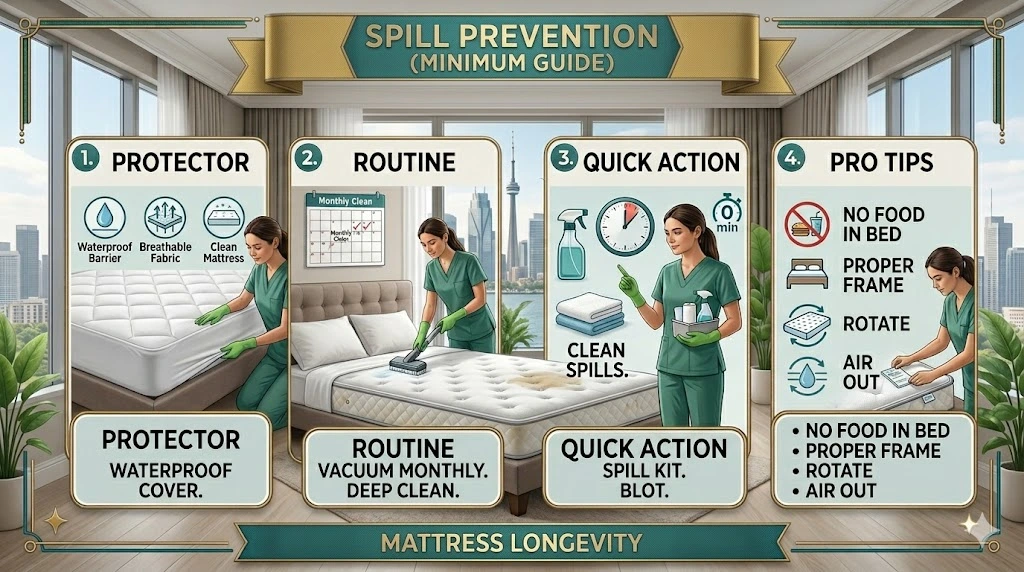
Prevention is always better than cleaning, and we want to help you keep your mattress fresh, hygienic, and long-lasting. By taking a few simple steps, you can avoid future accidents and save yourself from time-consuming cleaning.
1. Use Mattress Protectors
We recommend using waterproof and washable mattress protectors to safeguard against spills and accidents.
- Protects against urine and liquids: You won’t have to worry about accidental messes soaking into your mattress.
- Blocks allergens and dust mites: Helps maintain a healthier sleeping environment.
- Easy to maintain: Simply remove and wash regularly to keep your mattress fresh.
Tip for you: Choose fitted waterproof covers that wrap the mattress fully so nothing leaks underneath.
2. Establish a Regular Cleaning Routine
To keep your mattress in top condition, we suggest a few simple habits:
- Vacuum your mattress monthly: This removes dust, dirt, and allergens that accumulate over time.
- Air it out regularly: Remove sheets and let your mattress breathe, preferably in sunlight if possible.
- Rotate and flip (if possible): Ensures even wear and reduces odor buildup.
These habits help prevent urine or other stains from settling deeply.
3. Take Quick Action After Accidents
When accidents happen, acting fast is key. You should:
- Blot spills immediately: Press gently to absorb the liquid—don’t rub.
- Dry thoroughly: Make sure your mattress is completely dry before putting sheets back to prevent mold or mildew.
- Repeat if necessary: Some spills may require multiple rounds of cleaning.
We’ve found that this simple step can save a lot of frustration later.
4. Additional Pro Tips for Long-Lasting Result
Here are a few professional tips we always follow, and we recommend you do too:
- Test cleaning solutions first: Always try a small, hidden area to avoid discoloration.
- Use minimal liquid: Avoid over-wetting, which can encourage mold growth inside the mattress.
- Use enzyme cleaners for pets: Pet urine contains proteins that cause persistent odors—enzymes break them down effectively.
- Ventilate the room: Open windows or use a fan to speed up drying and reduce lingering smells.
- Layer your protection: Use a mattress protector under a washable fitted sheet for double defense.
By following these steps, you’ll ensure your mattress stays clean, odor-free, and lasts longer—saving you the stress of repeated deep cleaning.
Conclusion
Learning how to clean mattress pee effectively can save you time, money, and stress. With the right approach—blotting quickly, using vinegar solutions, and applying baking soda—you can remove both stains and odors successfully.
While DIY methods work well for most situations, don’t hesitate to seek professional cleaning services if the problem persists. A clean mattress not only improves comfort but also ensures a healthier sleeping environment for you and your family.
By following this complete guide, you can easily handle mattress accidents and keep your home fresh, clean, and hygienic.
Book your cleaning appointment with Mesh maids today.