
To clean and sanitize any type of kitchen countertops effectively, the first and foremost approach is to remove all debris, crumbs, and spills, then use an appropriate cleaner (choose the one that suits your surface) to wipe down every inch, followed by a disinfectant that’s safe for your countertop material. For daily maintenance, a gentle soap or an all-purpose cleaner—such as Seventh Generation, Method, Mrs. Meyer’s Clean Day, or a mild dish soap solution—works well, while deeper sanitization may require specialized products or natural solutions like diluted vinegar, baking soda paste, or hydrogen peroxide for tougher stains. As cleaning experts, we emphasize the importance of rinsing thoroughly and drying the surface to prevent streaks and bacteria buildup.
If you’re dealing with stains on your countertops, this guide is for you. Whether you have granite, quartz, laminate, or wood surfaces, we’ll show you the safest and most effective ways to keep your countertops clean and germ-free. We advise you to include cleaning the countertops in your house cleaning routine for effective and long-lasting results.
Why Cleaning and Sanitizing Kitchen Countertops Matters
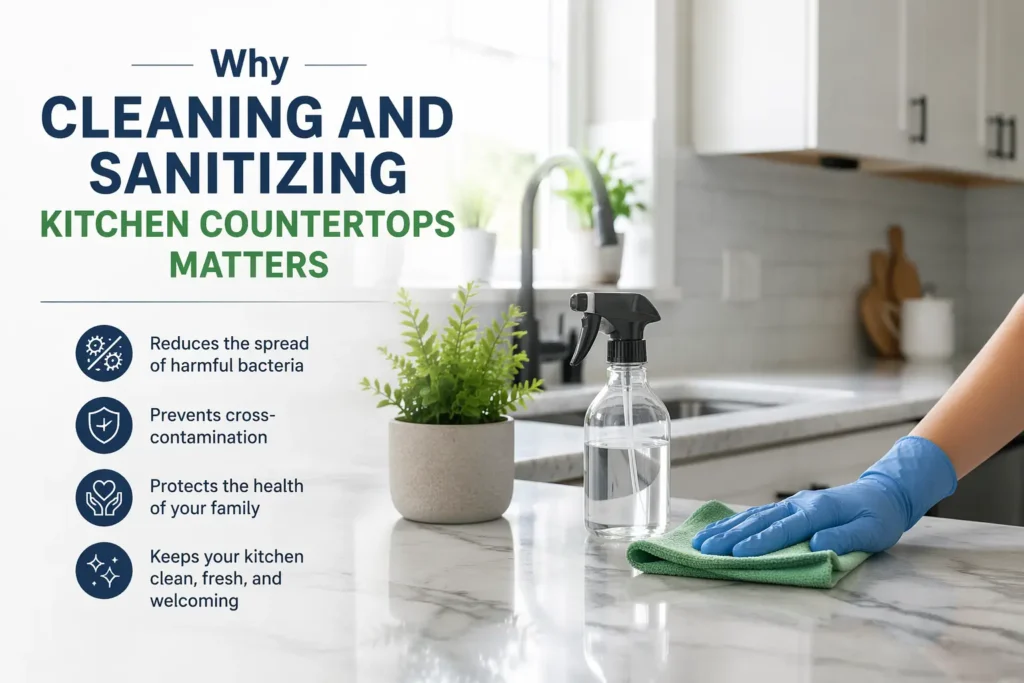
Your kitchen countertops are constantly exposed to food spills, raw ingredients, grease, and bacteria. Simply wiping them down isn’t enough to keep them truly clean and safe. We know from years of hands-on experience that regular cleaning and sanitizing not only keeps your countertops looking fresh but also protects your family from harmful bacteria.
Here are the key reasons why you should clean and sanitize your countertops regularly:
- Prevents the spread of harmful bacteria: Proper cleaning and sanitizing help protect your home from germs like E. coli and Salmonella.
- Removes grease, stains, and food residue: Regular care ensures your surfaces stay spotless and hygienic.
- Extends the life of your countertops (especially if you have white kitchen cabinets with black countertops): Dirt and grime can degrade surfaces over time, but consistent maintenance keeps them looking new.
- Maintains a visually appealing kitchen: Clean countertops instantly make your kitchen look organized, fresh, and welcoming.
- Promotes a healthier home environment: A sanitized kitchen reduces the risk of foodborne illnesses and supports overall household health.
Cleaning removes visible dirt and debris, while sanitizing tackles the invisible bacteria. Both steps are essential for a truly clean and safe kitchen. We also suggest that to purchase must-buy products to keep your kitchen clean.
With the methods we share in this guide, you can handle everyday messes and stubborn stains like a professional.
Understand When to Clean and When to Sanitize
Cleaning removes dirt, debris, and food residue, while sanitizing kills harmful bacteria that aren’t visible to the naked eye. The table below highlights common, real-life kitchen situations that we came across while house cleaning.
| Scenarios | Recommended Action | Why It Matters |
| You just wiped up cereal crumbs from breakfast | Clean | Prevents sticky buildup and keeps the surface ready for the next meal. |
| You cut raw chicken for dinner | Clean first, then sanitize | Eliminates Salmonella and E. coli that could contaminate other foods. |
| Your kid spilled juice or milk | Clean | Stops stains and prevents sticky residue that attracts bacteria. |
| After preparing sandwiches for the family | Clean | Removes crumbs, spreads, and leftover crumbs. |
| You notice a coffee or sauce stain | Clean first, sanitize if others will use the surface soon | Keeps surfaces hygienic and prevents permanent staining. |
| You’re prepping vegetables for a salad | Clean | Removes dirt and soil; sanitize if prepping for someone with a weak immune system. |
| You’re baking | Clean | Prevents buildup of flour dust that can harbor bacteria. |
Pro Tip: Make it a habit to clean your countertops after every use. Small, consistent actions prevent tough stains and reduce the need for heavy-duty cleaning later.
By understanding these day-to-day scenarios, you’ll know exactly when a simple cleaning is enough and when a proper sanitization step is required. This approach ensures your kitchen stays not only sparkling but safe for everyone in your home.
How to Clean and Sanitize Kitchen Countertops: Complete Steps
Before you start, we suggest you to gather essential tools and supplies like microfiber cloths, soft sponges, warm water, mild dish soap, all-purpose cleaner, diluted isopropyl alcohol (70%), gentle disinfectant spray, and a clean drying cloth for an efficient and effective cleaning.
With years of experience in cleaning kitchens, we’ve developed a simple routine that works on every surface. Follow these steps for everyday cleaning and sanitizing:
Step 1: Clear the Countertop
Remove all items such as appliances, utensils, and décor. A clear surface allows you to clean every inch without missing spots.
Step 2: Wipe Away Loose Debris
Use a dry cloth or microfiber duster to remove crumbs, dust, and small debris. This prevents scratching your countertop during the cleaning process.
Step 3: Clean the Surface
Mix warm water with a few drops of mild dish soap or an all-purpose cleaner (that suits your countertop)
- Dip a soft cloth or sponge into the solution.
- Wipe the entire countertop thoroughly, focusing on areas with visible stains or grease.
From our experience, this step is crucial to remove food residue before disinfecting, especially in high-traffic kitchen areas.
Step 4: Rinse
Use a clean damp cloth to remove soap residue. Leaving soap behind can cause streaks or dull the surface over time.
Step 5: Sanitize
Apply a safe disinfectant suitable for your countertop type. You may use diluted isopropyl alcohol (70%), a gentle bleach solution (1 tablespoon bleach per 1 quart of water), a surface-safe disinfectant spray like Lysol Kitchen Cleaner, or an eco-friendly option such as Seventh Generation Disinfecting Multi-Surface Spray.
Let the disinfectant be there for 1–2 minutes before wiping. This step ensures harmful bacteria are eliminated, keeping your kitchen safe for food preparation.
Cleaning Tip: Always check that the disinfectant is compatible with your countertop material before use.
Step 6: Dry the Surface
We recommend to use a clean microfiber cloth to dry the countertop completely. Drying prevents streaks, water spots, and bacteria growth.
Pro Tip: For busy kitchens, we recommend keeping a ready-to-use spray bottle of a mild disinfectant on hand. This makes it easy to sanitize immediately after spills, reducing buildup and keeping your countertops consistently hygienic.
How to Clean and Sanitize Different Countertop Surfaces (Granite, Quartz, Marble, and More)
With years of hands-on experience in cleaning different types of countertops, we believe that the cleaning and sanitizing procedure is the same for all that includes clearing, wiping, rinsing, disinfecting, and drying—but what makes the difference is the products you use on these surfaces. Choosing surface-appropriate cleaners and disinfectants ensures effective hygiene while protecting your countertops from damage.
Recommended Products for Different Kitchen Countertops
| Countertop Type | Recommended Cleaning Products | You Should Avoid Using | Sanitization Process |
| Granite Countertops | Warm water + mild dish soap, Weiman Granite Cleaner & Polish, Method Daily Granite Cleaner | Vinegar, lemon, acidic cleaners, bleach, abrasive pads, harsh chemicals | 70% isopropyl alcohol (1:1 with water) or eco-friendly spray like Seventh Generation Multi-Surface Spray. Let sit 1–2 mins, then wipe dry |
| Quartz Countertops | Warm water + mild dish soap, Weiman Quartz Cleaner & Polish, Method Daily Multi-Surface Cleaner | Strong acids, bleach, abrasive pads, high heat | Same as above |
| Marble Countertops | Warm water + mild dish soap, Weiman Marble & Granite Cleaner, Method Daily Multi-Surface Cleaner, StoneTech Daily Cleaner & Polish | Vinegar, lemon, bleach, harsh chemicals, abrasive pads | Same as above |
| Laminate Countertops | Warm water + mild dish soap, Formula 409 Multi-Surface Cleaner, Method Daily Multi-Surface Cleaner | Abrasive pads, bleach, acidic cleaners, excess water | Same as above |
| Butcher Block (Wood) Countertops | Warm water + mild dish soap, Howard Butcher Block Conditioner, Murphy’s Oil Soap | Harsh chemicals, bleach, acidic cleaners, excess water, abrasive pads | Same as above |
| Stainless Steel Countertops | Warm water + mild dish soap, Weiman Stainless Steel Cleaner & Polish, Bar Keepers Friend Soft Cleanser | Abrasive scrubbers, steel wool, acidic cleaners, bleach, standing water | Same as above |
Key Notes / Expert Tips:
- The sanitization process is consistent across all countertop types; what matters is the products you choose.
- Always wipe and dry after cleaning or sanitizing to avoid streaks, water spots, or damage.
- Sealing or conditioning natural stones and wood periodically helps in protecting surfaces and makes maintenance easier.
Top 5 Common Countertop Stains and How to Remove Them
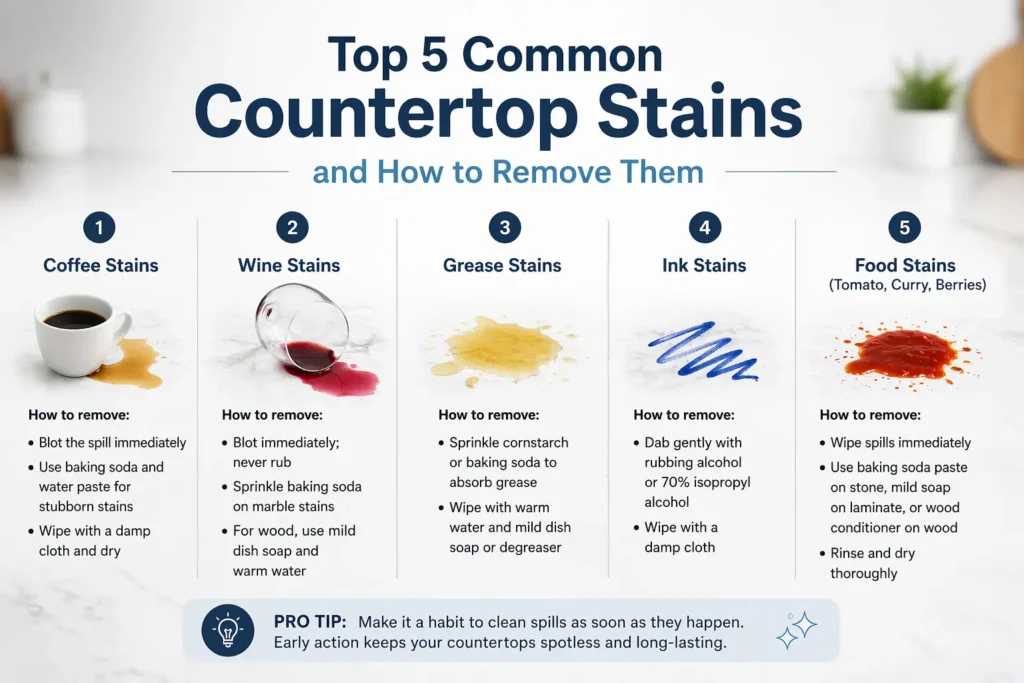
Even the most careful kitchen routines can’t prevent every spill. From morning coffee to late-night cooking messes, countertops face daily challenges. As cleaning experts, we’ve seen it all, and knowing the right approach for each type of stain can save your surfaces from long-term damage.
1. Coffee Stains
Coffee spills are a morning ritual gone wrong. On light-colored countertops like marble or laminate, they can leave stubborn marks.
How to remove coffee stains from kitchen countertops:
- Blot the spill immediately with a soft cloth.
- Use a mixture of baking soda and water to create a gentle paste for stubborn stains.
- Wipe thoroughly with a damp cloth and dry.
We often encounter clients who leave coffee cups on granite countertops. Acting quickly prevents discoloration and maintains the polished look.
2. Wine Stains
Red wine can be a nightmare on porous surfaces like marble or butcher block.
How to remove wine stains from countertops:
- We recommend blotting it immediately; you should never rub.
- For marble countertops, we suggest you sprinkle baking soda over the stain and let it sit for a few minutes, then wipe gently.
- For wood, you can use a mild dish soap and warm water solution.
While cleaning a home in Toronto during the Christmas season, we noticed a spilled glass of red wine had left a dark spot on the marble countertop. By using professional-grade marble cleaners and acting immediately, we restored the surface without etching the stone.
3. Grease Stains
Cooking oils and butter can leave slick, sticky patches on any surface.
How to remove grease stains from your kitchen countertop
- Sprinkle cornstarch or baking soda to absorb excess grease.
- Wipe with warm water and mild dish soap or a stone-safe degreaser.
We often see accumulated grease around stovetop areas on quartz and granite. Regular maintenance with recommended store-bought cleaners prevents in buildup and keeps surfaces hygienic.
4. Ink Stains
Pens, markers, or children’s art projects can leave marks, particularly on laminate or lighter stone surfaces.
How to remove ink stains from your kitchen countertop:
- Dab gently with rubbing alcohol or a 70% isopropyl alcohol solution.
- Wipe with a damp cloth afterward.
We’ve handled homes where kids’ drawings on laminate counters caused frustration. Using safe alcohol-based solutions removes ink without damaging the finish.
5. Food Stains (Tomato, Curry, Berries)
Highly pigmented foods like tomato sauce, curry, or berries can stain porous surfaces quickly.
Procedure to remove food stains from your countertop:
- Wipe spills immediately.
- For tougher stains, you should use baking soda paste on stone, mild soap solution on laminate, or Howard Butcher Block Conditioner on wood.
- Then, rinse and dry thoroughly.
In Vancouver homes, we often notice curry or tomato stains that have set into granite or wood overnight. By acting immediately and using surface-specific products, we prevented permanent discoloration and restored the countertop’s natural look.
Pro Tip : Make it a habit to clean spills as soon as they happen. Even minor stains can turn into long-term problems if ignored.
Pro Tips from Mesh Maids
From years of professional experience, we know that small habits can make a big difference in keeping your kitchen countertops spotless and hygienic. Here are some tips
- Use separate cloths for cleaning and sanitizing – This prevents cross-contamination and ensures surfaces stay truly germ-free.
- Keep a dedicated kitchen cleaning kit – Having all your tools and products in one place saves time and keeps your routine consistent.
- Clean from least dirty to most dirty areas – This prevents spreading dirt and makes cleaning more efficient.
- Test new cleaners on a small hidden spot – Even safe products can sometimes react differently with certain surfaces; a quick test avoids damage.
- Maintain consistency for long-term results – Regular cleaning and timely sanitization prevent buildup, stains, and bacteria, keeping your countertops looking and feeling fresh.
Expert Tip: Don’t forget to clean your oven with baking soda.
Developing these habits not only protects your countertops but also makes routine cleaning faster and more effective, turning what feels like a chore into a simple, manageable task.
When to Consider Professional Cleaning Services like Mesh Maids
Even with consistent daily cleaning, some situations require professional attention—especially stubborn stains, heavy grease buildup, or delicate surfaces that need special care.
Professional cleaning services can:
- Deep clean and sanitize every inch of your countertops and kitchen surfaces
- Use safe, eco-friendly products that protect your family and your countertops
- Safeguard delicate materials like marble, quartz, and butcher block from damage
- Save you time and effort, letting you focus on enjoying your kitchen
As experienced cleaning experts in Canada, we provide customized deep cleaning solutions tailored to your kitchen’s needs. Whether you need professional cleaning services in Surrey, Mississauga, or Calgary, our team ensures your countertops are spotless, hygienic, and long-lasting.
Contact us today to schedule a professional kitchen cleaning.
Conclusion
Keeping your kitchen countertops clean and hygienic is not at all a complicated task. From understanding the right products for every type of countertop to tackling common stains and maintaining daily habits, this guide covers everything you need to protect your surfaces and ensure a healthy kitchen environment.
We hope this guide has addressed all your doubts and given you practical, actionable tips you can use every day. Remember, consistent care and the right products are key to long-lasting, spotless countertops.
Book now with Mesh Maids and let our team of experienced cleaning professionals bring a sparkling, hygienic shine to your kitchen.