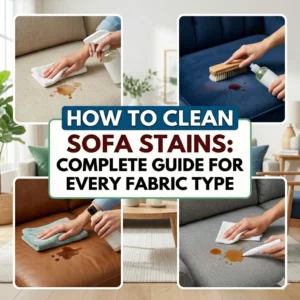
Sofa stains can be cleaned fast and effectively when you act immediately, identify the type of stain, and use the right cleaning method based on your sofa’s fabric. The fastest way to remove most stains is to gently blot the affected area to absorb excess liquid, apply a suitable cleaning solution—such as a mild detergent mix, white vinegar solution, or baking soda paste—and allow it to break down the stain before carefully lifting it away without spreading it further. Acting quickly prevents the stain from setting deep into the fibers, while using the correct technique ensures you remove the stain without damaging the upholstery or leaving behind residue, odors, or discoloration. Following these steps gives you a solid foundation for cleaning any sofa, whether it’s leather, microfiber, velvet, or cotton.
Once you’ve got the basics down, each fabric type requires its own approach to achieve the best results without causing damage. In this guide, we’ll walk you through how to clean every common sofa fabric safely and efficiently. We’ll share expert tips from we’ve learned from years of professional house cleaning, show you what works best for each material, and help you feel confident restoring your sofa to its fresh, spotless condition.
Why Proper Sofa Stain Cleaning Matters
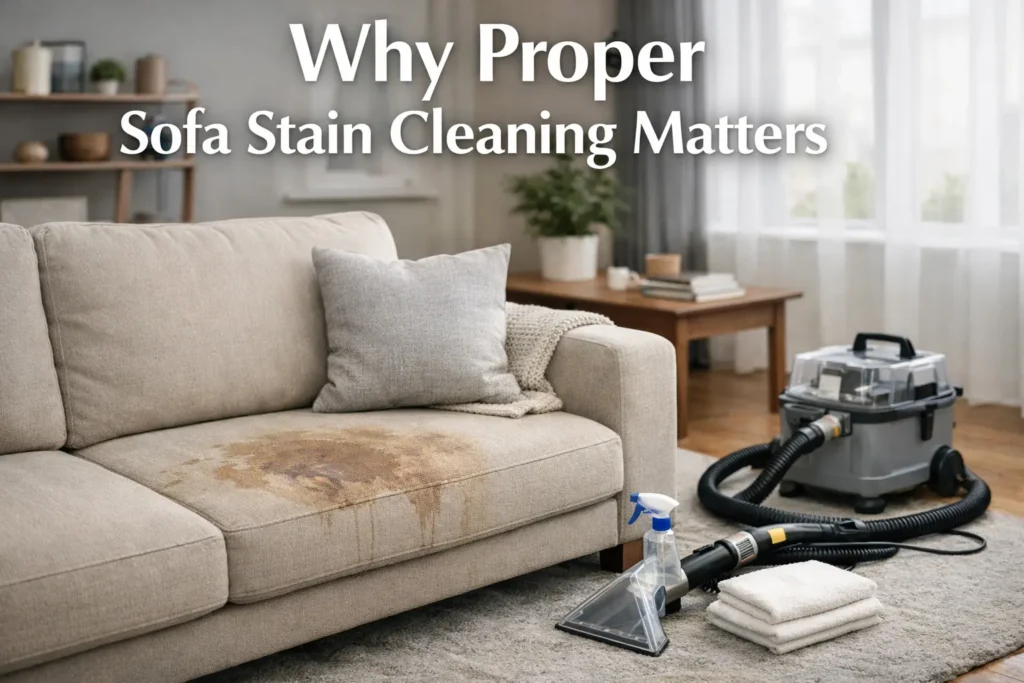
Sofa plays a crucial role in your home’s overall ambiance. When you tackle stains and dirt promptly, you not only protect your investment but also create a healthier living environment for you and your family.
Key Benefits of Regular Sofa Cleaning
- Prevents the buildup of dirt, allergens, and bacteria: We know that sofas can harbor dust, crumbs, and unseen bacteria, and regular cleaning ensures these don’t accumulate and affect your home’s air quality.
- Extends the life of your upholstery: By caring for your sofa properly, you can maintain its structure and strength, helping it last longer.
- Maintains the original look and texture: We use proven techniques that restore the fabric’s appearance and keep it feeling fresh and comfortable for daily use.
- Eliminates unpleasant odors: Whether it’s pets, food, or everyday use, consistent cleaning removes lingering smells, so your sofa always feels inviting.
- Reduces the need for expensive deep cleaning: By taking proactive steps, you minimize the risk of stubborn stains that require professional intervention later.
With the right approach, you can clean a sofa that not only looks great but also contributes to a cleaner, healthier, and more comfortable home. We understand how proper cleaning transforms both the furniture and the living space around it.
How to Identify Your Sofa Fabric Before Cleaning
Before you attempt to clean any sofa stain, it’s essential to know exactly what fabric you’re working with. Using the wrong cleaning method can cause permanent damage, discoloration, or texture changes. Most sofas come with a cleaning code tag, typically located under the cushions or on the manufacturer’s label, which tells you what type of cleaner is safe to use.
Common Sofa Cleaning Codes
- W – Water-based cleaners are safe: You can use mild soaps or water-based solutions without risk.
- S – Solvent-based cleaners only: Avoid water; use a solvent or dry-cleaning product designed for this fabric.
- WS – Water or solvent cleaners are safe: You have flexibility with either type of cleaner.
- X – Vacuum only: No liquids should be applied; cleaning is limited to vacuuming.
We always recommend checking these codes before treating any stain, because following the right method not only protects your sofa’s fabric but also ensures the cleaning is effective. By understanding your sofa’s material, you can clean confidently and avoid costly mistakes.
Sofa Fabric Guide & Choosing the Right Cleaning Method
Not all sofas are created equal, and knowing your fabric is the first step to effective cleaning. Different materials react differently to stains, moisture, and cleaning solutions, so using the wrong method can cause permanent damage. Here’s a guide to help you clean any sofa safely:
Linen
Linen is delicate and prone to wrinkles and water spots. We recommend using a mild water-based cleaner and blotting gently. Avoid soaking the fabric, and let it air dry naturally.
Chenille
Chenille has a soft, textured surface that can trap dirt and crumbs. We suggest vacuuming regularly and using a gentle soap solution for stains. Always test in a hidden spot first to prevent color fading.
Suede
Suede requires extra care because it’s sensitive to moisture. We advise using a dry brush or specialized suede cleaner. Avoid water entirely, as it can leave permanent marks.
Performance Fabrics
Performance or synthetic fabrics are designed to resist stains and fading. We recommend light soap-and-water solutions for most spills and blotting rather than rubbing. These fabrics are forgiving, but quick action still matters.
By identifying your sofa’s fabric first, you can choose the right cleaning method, protect your investment, and prevent costly mistakes. Following these tailored approaches ensures your sofa stays fresh, spotless, and comfortable for years.
General Sofa Stain Cleaning Steps (Works for Most Fabrics)
Cleaning sofa stains effectively starts with a few simple steps that work for almost any fabric. By following these, you can prevent stains from setting and protect your sofa while restoring its freshness.
Best Cleaning Method to Clean Sofa Stains
Step 1: Act Quickly
Fresh stains are much easier to remove than dried ones. We recommend blotting spills immediately with a clean, absorbent cloth to stop the stain from spreading.
Step 2: Avoid Rubbing
Rubbing can push the stain deeper into the fibers and make it harder to remove. Always blot gently, letting the cloth absorb the spill rather than scrubbing it.
Step 3: Test Before Applying
Before applying any cleaning solution, test it on a hidden area of your sofa. This ensures it won’t cause discoloration, fabric damage, or texture changes.
Step 4: Use the Right Cleaner
Different fabrics require different cleaners. Water-based solutions work for some materials, while others need solvent-based products. Choosing the right cleaner is key to removing the stain safely and effectively.
Step 5: Dry Properly
After cleaning, allow the sofa to air dry completely. Proper drying prevents mold, mildew, and lingering odors, keeping your sofa hygienic and fresh.
By following these steps, you’ll handle most stains confidently, and we’ll guide you next on how to tackle stains for specific sofa fabrics like leather, microfiber, velvet, and cotton.
Tough Stains
For stubborn or set-in stains, a simple homemade solution can work wonders. We recommend making a paste using baking soda and water—apply it directly to the stain, let it sit for 15–20 minutes, and then gently wipe it away. This method helps lift tough stains without harsh chemicals, making it safe for most fabrics.
By using this approach, you can tackle even the trickiest spills confidently, and we’ll guide you further on fabric-specific solutions to ensure your sofa stays fresh, clean, and well-maintained.
How to Clean Microfiber Sofa Stains
Microfiber sofas are durable and popular for their soft texture, but they still require careful handling to avoid damage or discoloration.
Cleaning Steps for Microfiber
- Use rubbing alcohol or a solvent-based cleaner – Microfiber reacts well to alcohol-based solutions, which evaporate quickly and prevent water marks.
- Spray lightly on the stain – Avoid soaking the fabric; a light mist is enough.
- Blot with a white cloth – Gently lift the stain without rubbing to prevent spreading.
- Brush gently after drying – Restore the microfiber’s soft texture with a soft-bristled brush.
Unique Tip for Cleaning Microfiber Sofa
To keep the fabric looking plush and prevent matting, use a clean toothbrush or soft suede brush to lightly rub the fibers in circular motions after cleaning. This is especially effective for small, high-traffic areas and sets microfiber apart from fabrics like leather or cotton, which don’t require fiber restoration.
By following these steps and this microfiber-specific tip, you can maintain both the look and feel of your sofa while removing stains safely.
How to Clean Leather Sofa Stains
Leather sofas are elegant and durable, but they need gentle care to prevent cracking, discoloration, or dryness. Treating stains carefully ensures your leather stays soft, supple, and looking its best for years.
Basic Cleaning Method for Leather
- Mix equal parts water and white vinegar – This gentle solution helps lift stains without harming the leather.
- Wipe the stain using a soft cloth – Lightly dab the affected area; avoid scrubbing, which can scratch or damage the surface.
- Dry immediately with a clean towel – Leather should never stay wet for long periods, as moisture can lead to warping or discoloration.
Unique Tip for Leather Sofa/ Couch
After cleaning, apply a small amount of leather conditioner using circular motions, focusing on the cleaned area. This not only restores moisture and softness but also forms a protective layer that prevents future stains from setting in, which is a step microfiber or fabric sofas don’t require.
By following these steps and including conditioning, you can keep your leather sofa looking luxurious, hygienic, and well-maintained.
How to Remove Common Types of Sofa Stains
Sofa stains come in many forms, and each requires a slightly different approach to clean effectively without damaging your fabric. As cleaning experts, we’ve helped countless homeowners in tackling these common stains, and here’s how you can handle them safely:
Food and Beverage Stains
Fresh spills need immediate attention. We recommend that you blot the area gently using a clean cloth, then use a mild soap solution to lift the stain. Avoid hot water, as it can set the stain into the fabric permanently.
Grease and Oil Stains
Grease can be tricky, but we’ve found that sprinkling baking soda or cornstarch on the stain helps absorb the oil. Let it sit for 15–20 minutes, then vacuum and follow up with a mild soap solution to clean any remaining residue.
Pet Stains
For pet accidents, we suggest using a vinegar and water solution to clean the spot, then sprinkle baking soda over the area to neutralize any lingering odors. Once dry, vacuum the area thoroughly to restore your sofa’s freshness.
Ink Stains
Ink requires careful handling. We advise dabbing the stain gently with rubbing alcohol, blotting repeatedly until it lifts. Avoid rubbing, which can spread the ink and damage the fabric.
By following these targeted methods, you can confidently tackle the most common sofa stains, keeping your furniture clean, hygienic, and looking its best. With our professional experience, we know that consistent care and the right techniques make all the difference.
Best Natural DIY Sofa Cleaning Solutions
Eco-friendly cleaning is becoming increasingly popular in 2026, and for good reason, as it gives excellent results. These ingredients keep sofas fresh, hygienic, and safe for families without relying on harsh chemicals.
Effective Natural Cleaners
- Vinegar + Water: This simple solution helps remove stains and neutralize odors on most fabrics.
- Baking Soda: Ideal for absorbing moisture and lingering smells, especially on high-traffic areas.
- Lemon + Water: Works well for light stains while leaving a fresh, natural scent.
Benefits of DIY Cleaning
Using natural cleaners comes with multiple advantages:
- Safe for kids and pets: You don’t have to worry about toxic residues.
- Cost-effective: Household ingredients can replace expensive chemical cleaners.
- Environmentally friendly: By choosing eco-friendly solutions, you’re reducing your household’s impact on the planet.
By following these natural methods, you can maintain a clean and fresh sofa while keeping your home safe and sustainable. We recommend combining these DIY solutions with proper stain removal steps to achieve the best results for every fabric type.
Common Mistakes to Avoid When Cleaning Sofa Stains
Even the most careful cleaning attempts can backfire if you make simple mistakes. You may unintentionally worsen stains or damage their sofas, so here’s what you should avoid:
- Using too much water or cleaner: Saturating the fabric can cause watermarks, shrinkage, or promote mold growth. Always use minimal solution and blot gently.
- Rubbing the stain: Rubbing spreads the stain and can damage the fibers. We always advise blotting or dabbing gently instead.
- Skipping fabric identification: Different fabrics require different cleaning methods. Using the wrong solution can cause permanent discoloration or texture changes.
- Neglecting drying: Leaving cleaned areas wet can lead to odors, mold, or mildew. Always allow proper air-drying or use a soft towel for blotting excess moisture.
- Overlooking professional help: Some stains, like ink, red wine, or pet accidents, may require expertise. We recommend calling professionals when stains persist, saving your sofa from long-term damage.
By avoiding these common mistakes, you can clean more effectively, preserve your sofa’s appearance, and save time and money in the long run.
Expert Tips for Long-Term Sofa Care

Keeping your sofa looking fresh and stain-free goes beyond occasional cleaning. Here’s how you can protect your investment:
Keep Your Sofa Clean Longer
- Use washable covers: Removable sofa covers or throws protect the fabric from spills and dirt while making cleaning quick and easy.
- Avoid eating on the couch: Food and drink are the most common sources of stains, so keeping meals off the sofa reduces cleaning frequency.
- Clean spills immediately: Quick action prevents stains from setting, making them easier to remove.
- Rotate cushions regularly: Rotating and flipping cushions ensures even wear, preserving your sofa’s shape and comfort.
- Keep pets off furniture (if possible): Pet hair, dirt, and accidents can accumulate over time. Using pet-friendly blankets or training can help maintain cleanliness.
By following these expert tips consistently, you can extend the life of your sofa, maintain its appearance, and reduce the need for deep or professional cleaning. With our experience, we know that small daily habits make a huge difference in keeping sofas looking spotless and inviting.
When to Call Professional Cleaning Services for Your Home
While many cleaning tasks can be managed at home, there are times when professional services are the safest and most effective choice. Here’s when you should consider calling the experts:
- Persistent Dirt or Stubborn Stains: Areas like carpets, rugs, tiles, and countertops can accumulate dirt and stains that DIY cleaning can’t fully remove. Professionals have the right tools and solutions to handle them safely.
- Delicate or Specialized Surfaces: Surfaces such as hardwood floors, marble countertops, leather furniture, or high-end appliances often require specialized techniques to avoid damage.
- Large Spaces or Entire Homes: Deep cleaning a full house can be overwhelming and time-consuming. Professional teams can efficiently clean every corner, saving you effort and energy.
- Odor and Allergen Control: Persistent odors, pet dander, dust mites, or mold can impact your family’s health. Pet-friendly professional cleaning removes these thoroughly, leaving your home fresh and hygienic.
- Busy Schedules or Special Occasions: Families with kids, busy professionals, or homes preparing for guests, move-outs, or special events benefit from professional cleaning to maintain a spotless, welcoming environment without stress.
By calling in professional cleaning services when needed, you ensure your home stays clean, safe, and well-maintained, while giving yourself more time for what matters most. Contact us for a healthy and inviting home.
Conclusion
Maintaining a clean and healthy home doesn’t have to be overwhelming. By following the right steps—from identifying surfaces and fabrics, tackling stains promptly, using effective DIY solutions, to adopting long-term care habits—you can keep your home fresh, hygienic, and inviting.
We’ve shared expert tips, natural cleaning solutions, and preventive strategies to help you handle everything from daily spills to tough, set-in stains. Remember, knowing when to call in professional cleaning services can make all the difference in protecting your surfaces, saving time, and ensuring a truly deep clean.
With consistent care and the right approach, you can enjoy a spotless, comfortable home that reflects your lifestyle and keeps your family healthy. Whether you tackle cleaning yourself or book your cleaning with a cleaning company like Mesh Maids, every step you take contributes to a cleaner, safer, and more welcoming home environment.