Introduction
The best way to clean upholstery is to remove loose dust and pet hair, vacuum the fabric and seams, treat stains individually, gently clean with a fabric-safe solution, and dry the furniture completely. You can also use simple DIY cleaning materials, such as baking soda, mild dish soap, white vinegar (where fabric-safe), clean microfiber cloths, and lukewarm water, to tackle everyday dirt, fresh spills, and unpleasant odours. If you live in Toronto, regular upholstery cleaning can keep your sofas, armchairs, and dining chairs fresh despite everyday spills, dust, and pet hair. However, being the industry experts, we always recommend to check the furniture’s cleaning code before applying any DIY solution, as different fabrics require different care.
At Mesh Maids, we understand the importance of choosing the right cleaning methods to avoid damaging upholstery or leaving moisture and residue behind. In this guide, we’ll explain how to clean upholstery safely, remove common stains and unpleasant odours, and prevent dirt from building up. We’ll also share practical maintenance tips and explain when to hire professional cleaning services in Toronto is the right choice for your home.
What Is the Best Way to Clean Upholstery at Home?

The best way to clean upholstery at home is to identify the fabric type. Whether you are cleaning a sofa, an armchair, or dining chairs in your Toronto home, we recommend checking the manufacturer’s care label before applying any water or cleaning solution. Different upholstery fabrics react differently to moisture, heat, and cleaning products, so using the wrong method can cause discolouration, watermarks, or shrinkage.
Follow these steps to clean your upholstery more effectively.
1. Check the Upholstery Cleaning Code Before You Start
Before choosing a cleaning solution, check the manufacturer’s label on your furniture. This helps you to determine whether the material can be cleaned with water, a solvent-based product, or professional cleaning.
| Cleaning code | What it means | How you should clean it |
| W | Water-based cleaning is permitted | Use a suitable upholstery cleaner that is compatible with the fabric. |
| S | Solvent-based cleaning is recommended | Use a product specifically labelled for the material, following its instructions. |
| WS or SW | Water-based or solvent-based cleaning may be permitted | Test the appropriate product on a hidden area first. |
| X | Vacuuming or professional cleaning is recommended | Do not apply water or ordinary upholstery cleaning products unless the manufacturer specifically permits them. |
These codes are common upholstery-care indicators, but labelling can vary by manufacturer. If your furniture has no care label, check the manufacturer’s guidance before attempting wet cleaning.
Our tip: Even if your upholstery has a W or WS code, test the cleaning product on a hidden area first. If the colour transfers to your cloth, the fabric changes texture, or a mark appears, stop and seek appropriate cleaning advice.
2. Vacuum the Upholstery to Remove Loose Dust and Debris
Before treating stains, vacuum the entire upholstered surface using a suitable upholstery attachment. Dust, crumbs, pet hair, and other particles often collect between cushions, along seams, and underneath furniture.
We recommend removing detachable cushions where possible and vacuuming both sides if the care instructions allow it. Use a crevice attachment to reach narrow gaps and the spaces between the seat and backrest.
Why this matters: Applying a wet cleaning solution before removing loose dirt can turn dust into muddy residue and spread it across the fabric. Vacuuming first helps you clean the upholstery more evenly and makes subsequent stain treatment easier.
If you have pets, use an appropriate upholstery attachment or pet-hair tool to remove embedded hair without pulling or damaging the fabric.
3. Treat Stains According to Their Cause
Not all upholstery stains respond to the same cleaning method. Food spills, coffee, grease, and ink have different properties, so using one cleaning solution for every stain may not produce good results.
We recommend treating a stain as soon as practical, provided the fabric’s care instructions allow it.
- Coffee and tea: Blot the spill with a clean, absorbent cloth. If water-based cleaning is permitted, use a compatible upholstery cleaner according to its instructions.
- Food and sauce: Carefully lift away solid residue with a spoon or blunt edge before treating the remaining mark with a suitable cleaner.
- Grease and oily stains: Avoid rubbing the stain or adding excessive water. Use a fabric-compatible product designed for oily stains, following the label instructions.
- Pet accidents: Absorb as much liquid as possible, then use a cleaner specifically formulated for the type of accident and compatible with the upholstery. Follow the product’s directions for application and drying.
- Ink and dye stains: Avoid experimenting with alcohol, bleach, or strong solvents. These substances can spread the colour or damage the upholstery finish. Seek professional advice if the stain persists.
Our tip: Blot from the outside of the stain towards the centre rather than rubbing back and forth. This helps reduce the risk of spreading the mark into a larger area. Always follow the furniture manufacturer’s instructions and the cleaning product’s label.
4. Use the Right Amount of Cleaning Solution
One common mistake we see everyone make is to use a cleaning product that does not necessarily make upholstery clean. Excessive solution can soak into the padding, leave residue, create watermarks, or extend drying time.
If your fabric permits water-based cleaning, apply a suitable upholstery cleaner in the amount recommended by the manufacturer. Use a clean cloth to work on the affected area gently, and avoid saturating the fabric.
We recommend cleaning a small section at a time rather than wetting the entire sofa at once. This gives you better control over the amount of moisture used and helps prevent uneven results.
5. Remove Cleaning Residue and Let the Fabric Dry Completely
After cleaning, follow the product instructions for removing any remaining solution. Some products require wiping with a clean, lightly damp cloth, while others have different finishing instructions.
Do not rinse upholstery indiscriminately, particularly if the material is solvent-cleaned or marked with an X code. Using the wrong finishing method can create additional damage.
We recommend improving airflow by opening windows when outdoor conditions are suitable or using a fan to help the upholstery dry. Avoid sitting on the furniture or replacing damp cushions until they are completely dry.
Our tip: Check the seams, cushion edges, and areas where the fabric meets the padding. These spots may retain moisture longer than the surface. If the furniture remains damp or develops a musty smell, stop using it until the moisture issue has been addressed.
6. Maintain Your Upholstery Between Deep Cleanings
Once your upholstery is clean, regular maintenance can help prevent dirt from accumulating and reduce the need for intensive cleaning.
We recommend vacuuming upholstered furniture weekly, or more frequently if you have pets or heavy daily use. Blot spills promptly, rotate or rearrange cushions where the manufacturer permits, and follow the care instructions when washing removable covers.
If your sofa still looks dull despite vacuuming, inspect the fabric for embedded dirt, residue from previous cleaning, or persistent stains. These problems may require a different cleaning method rather than repeated surface wiping. Read our detailed guide on how to clean sofa stains for every fabric type.
At Mesh Maids, we encourage you to choose cleaning methods based on your furniture’s material and condition.
You can instead hire Mesh Maids for your house cleaning needs. Read our blog on how much does house cleaning costs in Toronto, so that you can analyze your budget well.
How to Remove Common Stains from Upholstery
Stains from coffee, food, grease, and pets make your upholstered furniture look dirty even when you vacuum it regularly. In our view, the right treatment depends on what caused the stain and how the fabric responds to moisture and cleaning products. We recommend identifying the stain first, checking the upholstery care label, and testing any suitable cleaner on a hidden area before treating the affected spot.
Addressing spills promptly can help prevent them from becoming harder to remove. Here is how you can approach some common upholstery stains safely.
1. How to Remove Coffee and Tea Stains
Coffee and tea can leave visible brown marks because they contain coloured compounds that may bind to fabric fibres as the liquid dries.
- Blot the spill with a clean, absorbent cloth to remove as much liquid as possible.
- If the upholstery permits water-based cleaning, use a suitable upholstery cleaner according to its instructions.
- Blot gently with a clean cloth rather than scrubbing the stain.
- Follow the product’s directions for removing residue and allow the area to dry completely.
Cleaning Tip: Avoid rubbing the spill into the fabric. This can spread the stain and make the affected area larger.
2. How to Remove Grease and Oil Stains
Grease from food, body oils, or hair products can cling to upholstery fibres. Adding too much water may not remove the oily residue and can sometimes spread it.
- Gently lift any solid residue without pressing it into the fabric.
- Use a clean, dry cloth to blot excess grease where possible.
- Apply a fabric-compatible cleaner specifically intended for oily stains, following the product label.
- Avoid using strong solvents or dishwashing products unless the upholstery manufacturer confirms they are suitable.
Our tip: If the stain remains after treatment, avoid repeatedly applying cleaning products. Accumulated residue can leave a visible patch, so consider professional cleaning for persistent grease marks.
3. How to Remove Food and Sauce Stains
Food spills can leave both solid residue and coloured marks. Tomato sauce, for example, may leave a noticeable stain if it is rubbed into the upholstery.
- Lift excess food with a spoon or blunt edge.
- Blot the remaining stain with a clean cloth.
- Use an appropriate upholstery cleaner if the fabric’s care instructions permit it.
- Remove any residue as directed by the product manufacturer and allow the area to dry.
Our tip: Do not use excessive water to flush out a stain. Moisture can penetrate the cushion and make drying more difficult.
4. How to Remove Pet Stains and Unpleasant Odours
Pet accidents can leave both visible marks and lingering odours because liquid may penetrate beyond the fabric surface into the cushion filling.
- Blot up as much liquid as possible without rubbing.
- Choose an upholstery-compatible pet stain and odour remover.
- Follow the label instructions for application and drying.
- Check the cushion and seams for remaining moisture before using the furniture again.
Our tip: If the odour returns after the surface dries, residue may remain deeper inside the cushion. Repeated surface cleaning may not solve the problem, so professional assessment may be necessary.
5. How to Deal with Ink and Other Difficult Stains
Ink, marker, and dye stains can be particularly difficult because their pigments may spread or become more firmly attached to the fabric.
- Avoid rubbing the mark, as this can spread the pigment.
- Check the upholstery care label before choosing a cleaning method.
- Do not apply alcohol, bleach, or other strong solvents without confirming compatibility.
- If the stain remains, consult an upholstery cleaning professional.
Our recommendation: The sooner you address a spill, the less time it has to dry into the fabric. However, some stains permanently alter upholstery fibres or dyes, so complete removal cannot always be guaranteed.
At Mesh Maids, we recommend treating stains according to their cause and the upholstery’s cleaning requirements instead of using the same solution for every problem. If you are unsure about the fabric or a stain persists, seeking professional advice can help you avoid further damage to your furniture.
How to Remove Dust, Pet Hair, and Odours from Upholstery
Dust, pet hair, and unpleasant odours can accumulate in upholstered furniture even when the surface looks clean. Sofas and armchairs collect particles between cushions, along seams, and within fabric fibres through everyday use. The key is to identify what is causing the problem and choose a cleaning method that suits your furniture.
1. Remove Dust from Sofa Cushions and Seams
Dust often settles in places that are difficult to reach with ordinary cleaning tools. Wiping the visible surface of your sofa may leave particles trapped between cushions, along stitching, and underneath the seats.
Remove detachable cushions if the manufacturer permits it, then vacuum the exposed surfaces using an upholstery attachment. Use the crevice tool to reach narrow gaps and the spaces beneath the cushions.
From our house cleaning experience, we know that these areas can make a difference to the overall cleanliness of upholstered furniture. If dust returns quickly, check behind and beneath the sofa rather than repeatedly cleaning only the visible surfaces.
Note: Dealing with the dust? Check out our blog for the best ways to clean the dust from your home.
2. Remove Pet Hair Without Damaging the Fabric
Pet hair can cling to upholstery because of static electricity and the texture of the fabric. Start with a vacuum attachment designed for upholstery. If hair remains, try a fabric-compatible pet-hair removal tool, testing it on a hidden area first. Avoid rough brushes or sharp objects that could pull threads or damage the material.
If your pets frequently rest on the sofa, cleaning the cushions and removable covers regularly can help prevent hair from accumulating between deeper cleans.
3. Eliminate the Source of Upholstery Odours
Unpleasant smells can develop from spilled drinks, body oils, pet accidents, or moisture trapped inside cushions. Spraying air freshener over the furniture may mask the smell temporarily without addressing its cause.
First, identify where the odour is coming from. For fresh spills, blot up as much liquid as possible and use a compatible upholstery cleaner according to its instructions. If the furniture smells musty or remains damp, investigate the moisture source before applying more products.
We suggest to pay attention to the cause of a cleaning problem rather than just its visible symptoms. This approach is particularly important with upholstery because odours may persist when residue or moisture remains inside the cushioning.
4. Know When Upholstery Needs Deeper Cleaning
If your sofa still smells unpleasant, feels sticky, or looks discoloured after routine cleaning, dirt or cleaning residue may remain within the fabric. Persistent odours can also indicate contamination beneath the surface.
Check the care label before attempting a deeper treatment. Delicate materials, extensive staining, and odours that persist after appropriate spot treatment may require professional assessment.
At Mesh Maids, we understand that different fabrics require different cleaning approaches. If you are unsure which method is safe for your home’s furniture, seeking professional guidance can help you avoid damage from unsuitable products or excessive moisture.
How to Maintain Upholstery and Keep It Clean for Longer
Keeping upholstery for a longer period of time requires regular maintenance and attention to the areas that experience the most use. Sofas, armchairs, and dining chairs collect dust, body oils, pet hair, and food particles over time. At Mesh Maids, we focus on practical cleaning habits that help you to manage everyday dirt without repeatedly deep cleaning the furniture.
For your home, the goal is to prevent dirt from being embedded in the fabric and address spills before they leave permanent marks.
1. Vacuum Upholstery Before Dirt Becomes Embedded
Dust, crumbs, and pet hair become more difficult to remove when they accumulate between fabric fibres and cushion seams. Vacuuming your furniture regularly helps prevent this buildup.
We suggest vacuuming sofas and chairs weekly, paying extra attention to seat seams, cushion edges, and the spaces beneath removable cushions. If you have pets or use your living room frequently, adjust the schedule to suit your household.
2. Treat Spills Before They Become Stubborn Stains
A fresh spill is generally easier to address than a stain that has dried into the fabric. When a drink or food spills on your sofa, use a clean, absorbent cloth to blot the liquid rather than rubbing it into the upholstery.
In our cleaning experience, treating spills promptly helps limit how far they spread. Before applying a cleaning solution, check the manufacturer’s care instructions and test the product on an inconspicuous area.
3. Protect Frequently Used Areas from Everyday Dirt
Armrests, headrests, and seat cushions often accumulate body oils and dirt faster than less-used sections of furniture. These areas may begin to look dull even when the rest of the sofa appears clean.
We recommend paying particular attention to these high-use spots during routine maintenance. Wash removable covers according to their care labels, rotate cushions when permitted, and consider washable throws if pets regularly rest on your furniture.
4. Make Sure Upholstery Dries Completely After Cleaning
Moisture trapped inside upholstery can lead to musty odours and create conditions that encourage mould growth. This is why applying too much water during spot cleaning can create a problem that extends beyond the visible stain.
After cleaning, follow the product instructions and allow the fabric and cushioning to dry fully before using the furniture. We advise improving airflow with a fan or suitable ventilation and checking thicker cushions for lingering dampness.
5. Recognise When Your Home Needs Deep Cleaning
Routine vacuuming removes loose debris, but it may not eliminate embedded grime, accumulated residue, or persistent odours. If your upholstery still looks dull or smells unpleasant after regular maintenance, the issue may require a different cleaning approach.
Professional Upholstery Cleaning Tips from Mesh Maids
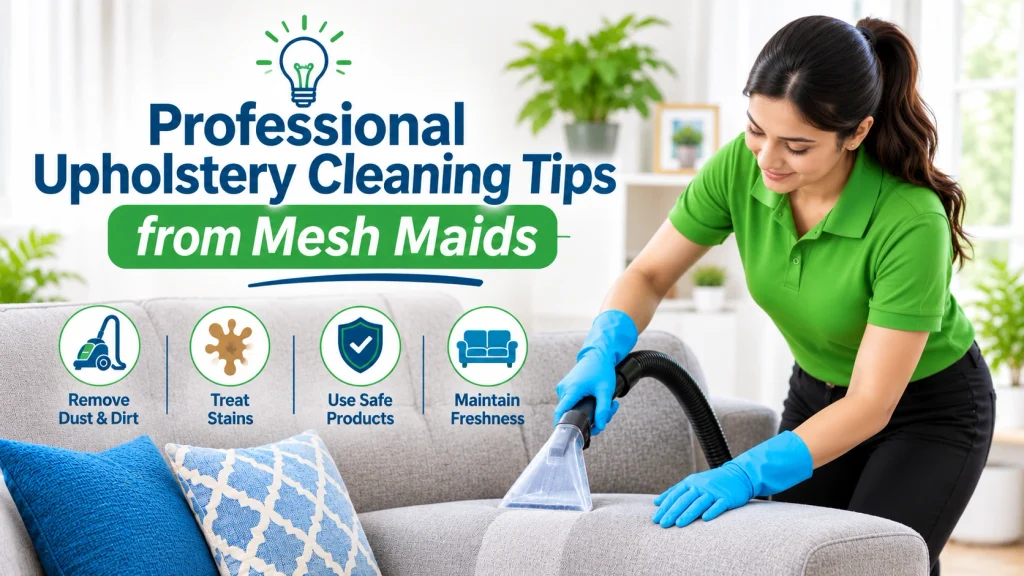
Cleaning upholstery effectively requires more than removing visible stains. From our experience at Mesh Maids, we know that the fabric type, the amount of dirt, and the way a stain is treated can all affect the final result. If you want to keep your sofa and chairs in good condition in your Toronto home, these practical tips can help you avoid common cleaning mistakes and get better results.
1. Check for Hidden Dirt Before Cleaning the Visible Surface
A sofa may look clean on the seat but still contain dust, crumbs, and pet hair between the cushions and along the seams.
We suggest running your hand along the cushion edges and checking beneath removable seats before you begin. Use a vacuum crevice tool to remove loose debris from these areas first. This prevents you from spreading accumulated dirt while wiping or treating stains.
2. Treat Watermarks as a Fabric Problem, Not Just a Stain
Have you ever cleaned a small spot on your sofa only to notice a larger ring after it dries? This can happen when moisture spreads dirt through the fabric or dries unevenly.
Before treating the mark again, check the upholstery care label and test a suitable cleaning method on a hidden section. Avoid repeatedly wetting the same spot, as this may make the watermark more noticeable or affect the fabric.
Our experience-based tip: When a water-safe fabric needs spot cleaning, avoid concentrating moisture on a tiny area if the product instructions call for broader, even treatment. Delicate fabrics may require professional assessment instead.
3. Remove Pet Hair Before Applying Any Cleaning Solution
Pet hair can become tangled in upholstery fibres, particularly on textured sofas and armchairs. If you wet the fabric before removing the hair, it can become more difficult to collect.
We recommend vacuuming first with a suitable upholstery attachment. For stubborn hair, use a compatible pet-hair removal tool and work gently to avoid pulling threads or damaging the fabric.
4. Avoid Using Too Much Cleaning Product on Greasy Armrests
Armrests and headrests often accumulate body oils, skincare products, and everyday grime. Applying extra cleaner may seem like a quick solution, but excess product can leave residue that attracts more dirt.
Use a cleaner specifically suitable for your upholstery and follow its label instructions. Work in manageable sections and remove residue as directed.
At Mesh Maids, we encourage a measured approach: using the correct product in the correct amount is more useful than repeatedly scrubbing the same area.
5. Check the Cushion Filling When an Odour Keeps Returning
If a sofa smells unpleasant again shortly after cleaning, the source may be deeper than the visible fabric. Spilled drinks, pet accidents, and trapped moisture can affect the cushion filling.
Blot fresh spills promptly and use an upholstery-compatible cleaner appropriate for the source. Allow the area to dry completely. If the odour persists, avoid soaking the cushion with additional products; the filling may need specialist treatment.
6. Clean the Underside and Back of Upholstered Furniture
Dust can collect behind sofas, beneath removable cushions, and along the lower edges of upholstered chairs. These areas are easy to miss when you focus only on the parts people see and touch.
During your next cleaning session, move lightweight furniture when safe, vacuum accessible hidden areas, and check fabric skirts and seams for accumulated debris. Follow the manufacturer’s instructions before removing any attached components.
7. Always Test a Cleaning Product Before Treating a Large Area
A product that works well on one sofa may not be suitable for another. Some fabrics can lose colour, develop texture changes, or show watermarks when exposed to incompatible cleaners.
We recommend testing the selected product on a concealed area and allowing it to dry fully before proceeding. If the colour transfers, the fabric changes, or a mark appears, stop and seek advice from the furniture manufacturer or an upholstery specialist.
8. Judge Cleaning Results Only After the Fabric Has Dried
Wet upholstery can look darker than the surrounding fabric, making it difficult to determine whether a stain has actually been removed. Applying more cleaner too soon can leave residue or create additional moisture problems.
Allow the upholstery to dry according to the product instructions before evaluating the result. If a mark remains, reassess the stain type and fabric compatibility rather than automatically repeating the same treatment.
9. Hire Mesh Maids for Professional Cleaning for Your Home
Keeping your home clean involves more than maintaining sofas, armchairs, and other upholstered furniture. Kitchens, bathrooms, bedrooms, and frequently used living spaces also need regular attention. Mesh Maids provides professional house cleaning services in Toronto to help you maintain a cleaner and more comfortable home.
Here is why homeowners choose us:
- Trained and vetted cleaners: Our cleaning professionals are trained, vetted, and background-checked to provide reliable home cleaning.
- Transparent flat-rate pricing: We offer upfront pricing based on your home’s size, condition, and cleaning requirements, with no hidden fees.
- Flexible cleaning schedules: Choose weekly, bi-weekly, monthly, or occasional cleaning according to your household’s needs.
- Eco-friendly cleaning products: We use non-toxic cleaning products suitable for homes with children and pets.
- Insured cleaning services: Our services include $7 million in liability coverage.
- 100% satisfaction guarantee: If we miss an area, report it within 24 hours, and we’ll arrange a revisit at no additional cost.
Whether you need regular upkeep or a detailed deep clean, we tailor our cleaning checklist to your home’s requirements and priorities. Contact us for all your house cleaning needs.
Conclusion
Through this guide, we hope we’ve cleared your doubts about how to clean upholstery and keep your furniture looking fresh. From removing loose dust and pet hair to treating coffee, grease, and food stains, using simple DIY cleaning solutions, and drying fabric properly, these steps can help you maintain your sofas, armchairs, and dining chairs at home. We’ve also shared practical upholstery care tips from our cleaning experience to help you avoid common mistakes and protect different fabric types. If your upholstery has stubborn stains, deeply embedded dirt, or persistent odours, consider professional cleaning to give your furniture the attention it needs. Book professional house cleaning services with Mesh Maids in Toronto and let our team take care of your everyday cleaning needs.