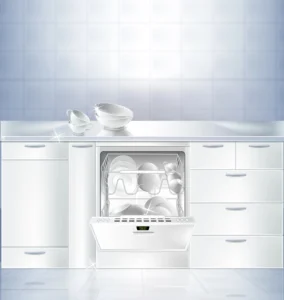
From Mesh Maids point of view, one of the easiest ways to deep clean a dishwasher with vinegar is to place 1 cup (approximately 240 ml) of undiluted white vinegar in a dishwasher-safe bowl on the upper rack and run an empty hot-water cycle. This helps to loosen greasy residue, dissolve some mineral deposits, and neutralise unpleasant odours that accumulate inside the appliance. For a more thorough clean, we also suggest to remove and washing the dishwasher filter, wiping the door seals and detergent dispenser, and checking the spray arms for trapped food particles.
An important precaution from Mesh Maids: Never mix vinegar with bleach or other cleaning chemicals. Always check your dishwasher manufacturer’s instructions before using vinegar, as its acidity may damage certain rubber seals and internal components.
In this guide, we share how to deep clean a dishwasher with vinegar, including the correct proportions, step-by-step cleaning methods, common mistakes to avoid, and expert tips to remove stubborn grease, unpleasant odours, and mineral buildup safely. Along with these DIY methods, we’ll also discuss how professional cleaning services in Oshawa tackle stubborn kitchen grease, neglected surfaces, and cleaning tasks that require more attention than routine household maintenance.
Which Dishwasher Parts Should You Clean Before Using Vinegar?
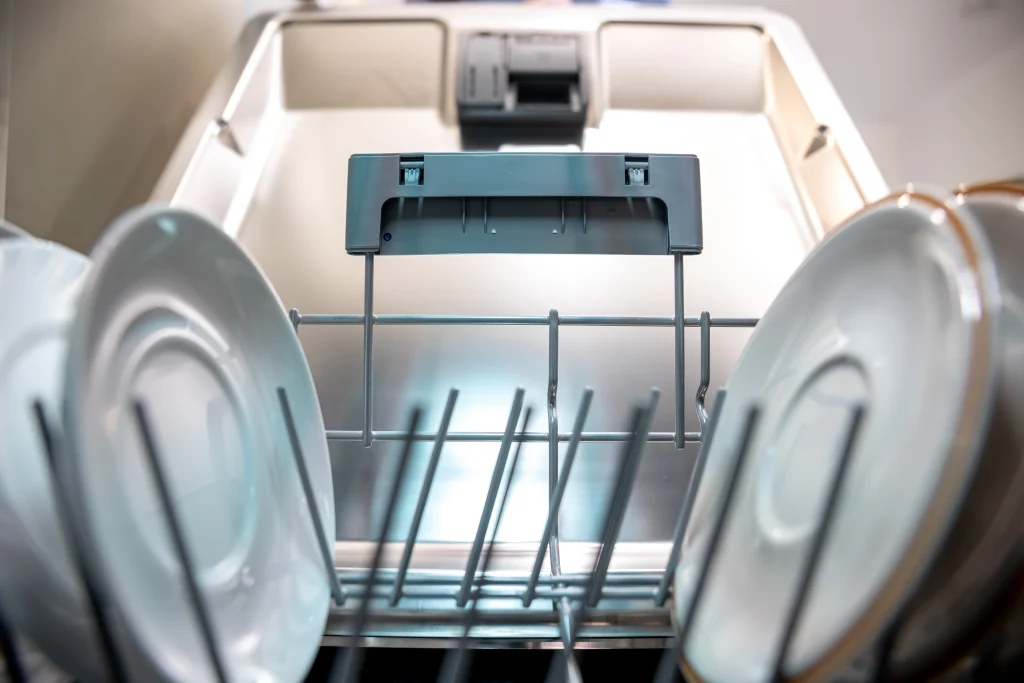
Before running a vinegar cleaning cycle, we suggest checking a few dishwasher components where grease, food scraps, and detergent residue tend to collect. These areas are often neglected during home routine cleaning, but cleaning them first helps to remove visible dirt that a vinegar cycle alone may not reach.
Here are the six areas we recommend to check before deep cleaning your dishwasher.
1. Dishwasher Filter and Filter Housing
- Remove the filter as instructed in your dishwasher manual.
- Rinse it under warm running water to loosen stuck food and grease.
- Use a soft toothbrush to clean the mesh and remove residue from the filter housing.
Mesh Maids tip: Check the filter for trapped rice, seeds, and small food scraps. These tiny particles are easy to overlook but can contribute to unpleasant dishwasher odours.
2. Dishwasher Spray Arms
Spray arms have small openings that distribute water across your dishes.
- Inspect the spray arm openings for visible blockages.
- Use a soft brush or toothpick to remove trapped particles carefully.
- Check that the spray arms can rotate freely after cleaning.
Mesh Maids tip: Do not force anything into the spray holes. Even small changes to their openings can affect how water is distributed.
3. Door Gasket and Rubber Seals
The rubber gasket traps moisture, grease, and food splashes, particularly around its folds and lower corners. Here’s how to clean
- Wipe the rubber seals with a damp microfiber cloth.
- Use mild dish soap and a soft toothbrush for stubborn residue.
- Dry the folds and corners with a clean cloth.
Mesh Maids tip: Avoid pouring vinegar directly onto rubber seals. Mild soap and water are generally a safer choice for these areas.
4. Detergent Dispenser
Detergent does not always dissolve completely. Small amounts can harden around the dispenser lid, edges, and hinges, especially when residue builds up over multiple wash cycles.
- Open the dispenser and remove any visible detergent buildup.
- Wipe the compartment with a damp microfiber cloth.
- Use a soft brush to reach narrow edges and corners.
Mesh Maids tip: Check whether the dispenser lid opens and closes smoothly. Hardened detergent around the hinges can interfere with its movement.
5. Dishwasher Drain and Bottom Basin
The bottom of your dishwasher can collect food scraps, grease, and standing water. If you notice an unpleasant smell after washing dishes, this is one of the first areas worth inspecting.
- Remove visible food debris from the bottom basin.
- Check the accessible drain opening for trapped particles.
- Wipe the surrounding area with a damp microfiber cloth.
Mesh Maids tip: If water continues to collect at the bottom after a completed cycle, check your manufacturer’s troubleshooting instructions or contact an appliance technician.
6. Dishwasher Racks and Utensil Holders
Food residue and hard water spots can also settle on the racks, especially around corners, joints, and utensil holders. These areas come into contact with your dishes regularly, so they deserve attention during a deep clean.
- Remove detachable racks and utensil baskets, if permitted by the manufacturer.
- Wash them with warm water and mild dish soap.
- Use a soft brush to remove residue from corners and narrow spaces.
- Check for chipped protective coatings or rust spots.
Mesh Maids tip: Pay attention to damaged rack coatings. Exposed metal can develop rust, so use a manufacturer-approved repair solution if needed.
Before moving to the vinegar cleaning cycle: Remove visible food debris, clean the filter, and check the spray arms. These simple steps address buildup in areas that vinegar cannot effectively clean on its own. Also, check your dishwasher manual before using vinegar, as some manufacturers advise against it.
Mesh Maids Tip: Keep your kitchen fresh by following our guide on fast and easy kitchen cleaning checklist with genius hacks.
How to Deep Clean a Dishwasher with Vinegar: Step-by-Step Guide for Cleaning
Once you have removed visible food particles and cleaned the accessible dishwasher components, you can move on to the vinegar cleaning cycle. White vinegar contains acetic acid, which helps loosen certain mineral deposits, greasy residue, and detergent buildup. It can also help neutralise some unpleasant odours caused by trapped food particles.
We suggest using plain white distilled vinegar rather than apple cider vinegar or coloured vinegar to avoid introducing additional colouring or fragrance into the appliance.
1. Empty the Dishwasher and Remove Loose Debris
Start by removing all dishes, glasses, cutlery, and utensils from the dishwasher. Check the bottom basin for leftover food scraps, plastic wrappers, labels, or other loose debris. Make sure the detergent dispenser is empty as well. Running an empty dishwasher allows the vinegar-containing water to circulate without food particles or detergent interfering with the cleaning process.
2. Measure the Correct Amount of White Vinegar
For the bowl method, use 1 cup (approximately 240 ml) of undiluted white distilled vinegar in a dishwasher-safe glass or ceramic bowl. We suggest measuring the quantity rather than estimating it directly from the bottle. Avoid adding baking soda, bleach, dish soap, or other cleaning agents, as combining different cleaning products can create unwanted chemical reactions or reduce cleaning effectiveness.
3. Place the Vinegar Bowl on the Upper Rack
Pour the measured vinegar into the bowl and place it upright on the upper dishwasher rack. Make sure the container is stable and does not obstruct the spray arms or interfere with their movement. Keep the bowl open so water can enter and mix with the vinegar during the wash cycle. Avoid pouring vinegar directly into the dishwasher drain or onto rubber seals.
4. Run an Empty Hot-Water Cleaning Cycle
Close the dishwasher door and select a suitable normal or hot-water cleaning cycle, following your appliance manufacturer’s instructions. Do not add regular dishwasher detergent during this process. As the dishwasher operates, water circulates around the bowl and gradually mixes with the vinegar, helping loosen certain greasy films and mineral residues from accessible interior surfaces.
Mesh Maids Precautionary Tip: Always check your dishwasher manual before using vinegar. Some manufacturers advise against acidic cleaning solutions because repeated exposure may affect rubber seals, protective coatings, or internal components. If vinegar is not approved, choose a manufacturer-recommended dishwasher cleaner instead.
5. Wipe the Dishwasher Interior with a Microfiber Cloth
Once the cycle finishes, open the door and allow the interior to cool slightly. Use a clean, damp microfiber cloth to wipe the interior walls, lower corners, door edges, and areas around the detergent dispenser. If you notice stubborn greasy residue, use a little mild dish soap and water where permitted by the manufacturer, then wipe away the remaining soap with a clean damp cloth.
Our cleaning insight: We pay particular attention to the lower door edges and corners during detailed kitchen cleaning because these areas often collect watermarks, detergent splashes, and greasy residue that are easily missed during everyday wiping.
6. Inspect the Dishwasher Before Using It Again
Before loading your dishes, inspect the interior for any remaining greasy film, white mineral marks, or visible food residue. Check that the filter is correctly installed, the spray arms rotate freely, and there is no unusual standing water in the bottom basin. If stubborn limescale remains, vinegar may not be sufficient. Use a dishwasher-compatible descaling product approved by your appliance manufacturer and follow its instructions.
>> Get insight on how to keep your kitchen germ-free with our list of best kitchen cleaning products.
What to Do If Vinegar Doesn’t Remove Stubborn Dishwasher Buildup?
White vinegar can help loosen light grease, certain mineral deposits, and detergent residue, but it may not remove every type of dishwasher buildup. Older stains, thick grease layers, heavy limescale, and debris trapped in internal components often require a different cleaning approach. From our experience at Mesh Maids, identifying the type of buildup before choosing a cleaning solution is important to avoid damaging the appliance.
Here are some practical ways to deal with residue that remains after a vinegar cleaning cycle.
1. Use a Dishwasher-Safe Degreaser for Stubborn Grease
If you still notice a greasy film on the dishwasher walls, racks, or bottom basin after cleaning with vinegar, use a dishwasher-compatible degreasing cleaner approved by the manufacturer. Follow the product instructions for the correct amount and cleaning cycle. Avoid using regular kitchen degreasers inside the appliance, as they may produce excessive foam or leave unsuitable chemical residue.
2. Use a Dishwasher Descaler for Heavy Limescale
White, chalky deposits around the dishwasher interior, heating area, and spray arm openings may indicate hard water buildup. Vinegar may loosen some light mineral deposits, but heavy limescale often requires a dedicated dishwasher descaling product. Choose one that is compatible with your appliance and follow the recommended dosage rather than repeatedly exposing the dishwasher to acidic solutions.
3. Check the Filter and Drain for Lingering Odours
If an unpleasant smell remains even after the vinegar cycle, the problem may be trapped food debris rather than dirty interior surfaces. Remove the filter according to the manufacturer’s instructions, rinse away accumulated food particles, and inspect the accessible drain area. Also, wipe the lower door corners and rubber gasket, where moisture and residue can remain unnoticed.
Note: Always clean the drainage area, including the drain of your kitchen sink, to prevent dirt, grease, and residue from accumulating.
4. Clear Blocked Spray Arms
Sometimes dishes continue to come out dirty because food particles or mineral deposits have blocked the spray arm openings. Remove the spray arms only if your dishwasher manual allows it, then inspect the water jets for visible obstructions. Use a soft brush or toothpick carefully to clear debris without damaging or enlarging the openings. If water distribution problems continue, the spray arm or water supply system may need professional inspection.
5. Get Professional Help for Persistent Drainage Problems
If water continues to collect at the bottom of your dishwasher, the appliance makes unusual noises, or it fails to drain properly, repeated cleaning cycles may not solve the problem. Check the manufacturer’s troubleshooting instructions and contact a qualified appliance technician if the issue continues. Avoid dismantling pumps, hoses, or electrical components yourself.
A cleaning insight from Mesh Maids: We suggest identifying whether you are dealing with grease, food debris, or mineral deposits before selecting a cleaning method. Each type of buildup requires a different approach, and using more vinegar or combining multiple cleaning products will not necessarily produce better results.
Can Vinegar Damage Your Dishwasher? What You Should Know Before Cleaning
Vinegar is a popular DIY cleaning ingredient, but using it inside a dishwasher requires some care. Although white vinegar can help loosen light grease and certain mineral deposits, its acidic properties may not be suitable for every dishwasher component. Repeated or prolonged exposure can affect certain rubber seals, protective coatings, and other materials, depending on the appliance design.
From our cleaning experience, we suggest checking the manufacturer’s recommendations before using homemade cleaning solutions. Here are a few things you should understand before cleaning your dishwasher with vinegar.
1. Vinegar Can Affect Rubber Seals and Gaskets
Dishwasher door seals and gaskets are designed to prevent water from leaking during wash cycles. However, repeated exposure to acidic cleaning solutions may affect certain rubber and elastomer materials over time.
If the seals become worn, brittle, or damaged, they may no longer create a proper barrier against water leakage. We suggest cleaning these areas with a damp microfiber cloth and mild dish soap rather than applying vinegar directly.
2. Repeated Vinegar Use May Affect Protective Coatings
Some dishwasher interiors contain coated metal surfaces and protective finishes designed to withstand regular exposure to water and detergents. Frequent use of acidic solutions may affect certain finishes, particularly if the material is not designed to tolerate them.
Avoid soaking interior surfaces in vinegar or using concentrated vinegar repeatedly. If you notice discolouration, surface damage, or unusual marks, stop using the solution and consult your appliance manual.
3. Some Dishwasher Manufacturers Discourage Vinegar Cleaning
Not every dishwasher is designed for vinegar-based cleaning. Some manufacturers advise against using vinegar because its acidity may affect specific internal components, seals, or protective finishes. Others recommend dedicated dishwasher cleaning products for removing grease, odours, and mineral deposits.
Before trying the bowl method, check your appliance manual for approved cleaning ingredients and instructions. If vinegar is not recommended, choose a dishwasher cleaner specifically formulated for your appliance.
4. Choose Safer Cleaning Alternatives for Different Dishwasher Materials
If your dishwasher manufacturer does not recommend vinegar, you can still clean the appliance using suitable alternatives. The right option depends on the type of residue and the materials used inside your dishwasher.
- For rubber seals and gaskets: Use mild dish soap diluted in water and wipe gently with a microfiber cloth.
- For stainless steel interiors: Use a manufacturer-approved dishwasher cleaner and a soft cloth to remove visible residue.
- For hard water deposits: Choose a dishwasher-compatible descaling product formulated for your appliance.
- For greasy interior surfaces: Use a dishwasher-safe cleaning product designed to break down grease without damaging internal components.
Mesh Maids expert advice: We believe the cleaning solution should suit the surface being cleaned. Vinegar may be useful for certain dishwasher cleaning tasks, but it should not be treated as a universal solution. Always follow your appliance manufacturer’s instructions and choose compatible products to avoid unnecessary wear or damage.
When Should You Consider Professional Cleaning Services in Oshawa?
Cleaning a dishwasher with vinegar address certain types of residue, but kitchen cleaning often involves more than one appliance or surface. Grease around stovetops, sticky cabinet handles, backsplash stains, and dirt accumulated in hard-to-reach corners can require additional attention. These areas may be difficult to manage through everyday wiping, particularly when buildup has been left unattended for a long time.
At Mesh Maids, we provide professional cleaning services in Oshawa to help you tackle everyday dirt, stubborn kitchen grease, and neglected areas. Our cleaners pay attention to frequently used areas, kitchen counters, exterior appliance surfaces, cabinet fronts, and other accessible spaces that often need more detailed cleaning.
Contact us, whether you need deep cleaning or regular home cleaning. At Mesh Maids, we offer flexible scheduling and transparent flat-rate pricing based on your home’s size, condition, and cleaning requirements. Our goal is to help you spend less time dealing with accumulated household mess and more time enjoying a clean, comfortable living space.
Conclusion
We hope this guide has helped you understand how to deep clean a dishwasher with vinegar, from measuring the correct amount of white vinegar to cleaning individual components and removing stubborn residue. As we discussed, using 1 cup (approximately 240 ml) of white vinegar in a dishwasher-safe bowl can help loosen certain grease deposits, light mineral buildup, and unpleasant odours. However, always check your appliance manufacturer’s instructions before using vinegar to avoid damaging sensitive components.
At Mesh Maids, we believe that a clean kitchen starts with paying attention to the areas that are often overlooked. Along with maintaining your dishwasher, give your kitchen counters, cabinets, appliance exteriors, and other frequently used surfaces regular attention. If accumulated grease and household dirt require a more thorough approach, our professional cleaning services can help you bring your home back to a cleaner, fresher condition. Book your professional house cleaning services with Mesh Maids today.